Read Lee Shearer's Athens Banner Herald story on museum donor and great friend C.L. Morehead [here].
A bit:
"The Dodd paintings and drawings, along with hundreds of items of Dodd memorabilia, one day will go to the Georgia Museum of Art. So will the African art collection and much of the rest of Morehead's collections.
Morehead's art collection grew out of a friendship with Dodd that developed over decades - as did Morehead's resolve to give it all to his alma mater's art museum, he said."

Thursday, July 31, 2008


Monday, July 21, 2008
...and we're open...
for now.
The Georgia Museum of Art has been closed since May for bringing our fire suppression system to state-of-the-art levels. We will again close, likely for more than 18 months, beginning this November as we expand another 30,000 sq. ft.
I was included on Newsmakers with Tim Bryant last Friday on News-Talk 1340 WGAU to talk about the re-opening. Link to the podcast of the interview, which includes U.S. Senate candidate Vernon Jones and Mr. McGuinty, is [here].
 As mentioned in the interview, we open with a special, temporary exhibition organized by the San Diego Museum of Art: Everett Gee Jackson/San Diego Modern, 1920-1955. The display is "the first comprehensive look at Jackson's artistic output since his death in 1995. As a pioneer of progressive art in southern California, Jackson held a lifelong interest in vanguard aesthetics and formalist compositions. The exhibition chronicles his career, from his youth in east Texas to his early training at the Art Institute of Chicago to his extended Mexican sojourn -- where he encountered the influential work of the Mexican muralists -- to his long and distinctive presence in the art community of southern California. During his travels and work, he encountered numerous other American artists, including Jean Charlot, Fritz Winold Reiss and Edward Weston. An exhibiting artist, book illustrator and important teacher, Jackson reflected the broader understanding of 'modernism' in American art in his work." Everett Gee Jackson features about 50 of the artist's paintings and works on paper.
 To go along with the Jackson exhibition, we pulled together From the Collection: The Authority of the Mexican Muralists. Numerous American and Mexican artists were profoundly influenced by the modernist work of José Clemente Orozco, Diego Rivera, and David Siqueiros. Several artists, including Lucienne Bloch, Jean Charlot, and Ben Shahn, in this display worked with Diego Rivera on his mural projects. James Guy studied with Orozco; Harold Lehman worked under the leadership of Siqueiros; Syd Brown, Francis Chapin, and Joseph Marguiles traveled to
 Mexico
Plus, we have put up favorites: from the Kress collection to Pierre Daura to Winslow Homer's Taking Sunflower to Teacher [just back from the Homer watercolors show at the Art Institute of Chicago] to Georgia O'Keeffe to our great American landscapes, and much more.
Images: (1) Everett Gee Jackson (American, 1900-1995), Spring in San Diego, 1931; Oil on panel, 34 1/4 x 29 1/4 inches. Jackson Family Collection. (2) Jean Charlot (American, b. France, 1898-1979), Untitled (Mother with Child on Back), 1941. Watercolor on wove paper, 29 1/16 x 21 3/4 inches (sheet). Georgia Museum of Art, University of Georgia; gift of Mary and Lamar Dodd, Athens, Georgia. GMOA 1973.3180
The Georgia Museum of Art has been closed since May for bringing our fire suppression system to state-of-the-art levels. We will again close, likely for more than 18 months, beginning this November as we expand another 30,000 sq. ft.
I was included on Newsmakers with Tim Bryant last Friday on News-Talk 1340 WGAU to talk about the re-opening. Link to the podcast of the interview, which includes U.S. Senate candidate Vernon Jones and Mr. McGuinty, is [here].
As mentioned in the interview, we open with a special, temporary exhibition organized by the San Diego Museum of Art: Everett Gee Jackson/San Diego Modern, 1920-1955. The display is "the first comprehensive look at Jackson's artistic output since his death in 1995. As a pioneer of progressive art in southern California, Jackson held a lifelong interest in vanguard aesthetics and formalist compositions. The exhibition chronicles his career, from his youth in east Texas to his early training at the Art Institute of Chicago to his extended Mexican sojourn -- where he encountered the influential work of the Mexican muralists -- to his long and distinctive presence in the art community of southern California. During his travels and work, he encountered numerous other American artists, including Jean Charlot, Fritz Winold Reiss and Edward Weston. An exhibiting artist, book illustrator and important teacher, Jackson reflected the broader understanding of 'modernism' in American art in his work." Everett Gee Jackson features about 50 of the artist's paintings and works on paper.To go along with the Jackson exhibition, we pulled together From the Collection: The Authority of the Mexican Muralists. Numerous American and Mexican artists were profoundly influenced by the modernist work of José Clemente Orozco, Diego Rivera, and David Siqueiros. Several artists, including Lucienne Bloch, Jean Charlot, and Ben Shahn, in this display worked with Diego Rivera on his mural projects. James Guy studied with Orozco; Harold Lehman worked under the leadership of Siqueiros; Syd Brown, Francis Chapin, and Joseph Marguiles traveled to Plus, we have put up favorites: from the Kress collection to Pierre Daura to Winslow Homer's Taking Sunflower to Teacher [just back from the Homer watercolors show at the Art Institute of Chicago] to Georgia O'Keeffe to our great American landscapes, and much more.
Images: (1) Everett Gee Jackson (American, 1900-1995), Spring in San Diego, 1931; Oil on panel, 34 1/4 x 29 1/4 inches. Jackson Family Collection. (2) Jean Charlot (American, b. France, 1898-1979), Untitled (Mother with Child on Back), 1941. Watercolor on wove paper, 29 1/16 x 21 3/4 inches (sheet). Georgia Museum of Art, University of Georgia; gift of Mary and Lamar Dodd, Athens, Georgia. GMOA 1973.3180
Wednesday, May 28, 2008
Visit to Toshiko Takaezu
Among the litany of tasks during a recent trip to the New York City area for (the museum's director) Bill Eiland, (assistant director) Annelies Mondi, and yours truly was a visit to the (very rural) New Jersey home and studio of Toshiko Takaezu.
Ms. Takaezu very generously donated several of her own works of art to the Georgia Museum of Art.
A few pictures from the visit:


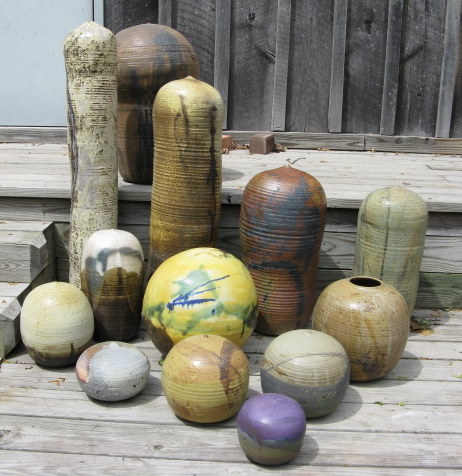


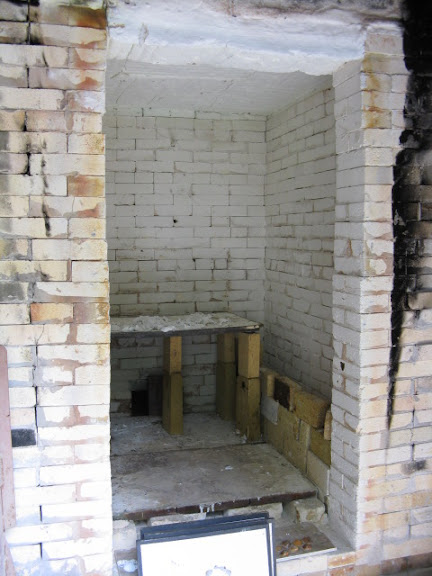
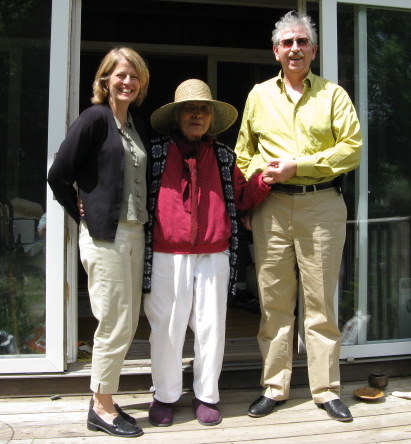
Ms. Takaezu very generously donated several of her own works of art to the Georgia Museum of Art.
A few pictures from the visit:
Wednesday, May 21, 2008
Medal
Bronze, to be exact.
The Georgia Museum of Art just won an award for the catalogue for Amazing Grace: Self-Taught Artists from the Mullis Collection.
The award? A bronze medal in the 12th Annual IPPY Awards presented by Independent Publisher.

From their site: "As our contest motto, "Recognizing Excellence in Independent Publishing" implies, here is a list of 450 excellent books -- the best independently published books of the past year -- in 64 national categories, ten Outstanding Book of the Year categories, and 20 Best Regional Fiction and Non-Fiction categories. ...This year's contest attracted 3,175 total entries, with over 2,500 entries in the national categories and over 600 entries in the regional competition. Books came from 49 U.S. states (come on, North Dakota!), D.C., and U.S. Virgin Islands; 9 Canadian provinces (get with it, Northwest Territories!), and 16 countries around the world: Trinidad to Thailand, Croatia to Czech Republic, and France to Finland. It's been a priviledge to judge such a large and wonderfully eclectic collection of books. ...We were impressed with...the breathtaking artwork and photography in our fine arts and coffee table book entries."
 Amazing Grace, now an award-winning catalogue, was produced in conjunction with the eponymous exhibition at the museum Sept. 29, 2007 to Jan. 6, 2008. The hardcover 12-by-12-inch exhibition catalogue features full-page color illustrations of all 90 works in that exhibition, organized by Paul Manoguerra, curator of American art at the Georgia Museum of Art, as well as essays by Carl Mullis, the collector, and Carol Crown, professor of art history at the University of Memphis. Biographies of all the artists, from Howard Finster and R.A. Miller to Sister Gertrude Morgan and Mary T. Smith, by Manoguerra, follow the exhibition catalogue section.
The Georgia Museum of Art just won an award for the catalogue for Amazing Grace: Self-Taught Artists from the Mullis Collection.
The award? A bronze medal in the 12th Annual IPPY Awards presented by Independent Publisher.
From their site: "As our contest motto, "Recognizing Excellence in Independent Publishing" implies, here is a list of 450 excellent books -- the best independently published books of the past year -- in 64 national categories, ten Outstanding Book of the Year categories, and 20 Best Regional Fiction and Non-Fiction categories. ...This year's contest attracted 3,175 total entries, with over 2,500 entries in the national categories and over 600 entries in the regional competition. Books came from 49 U.S. states (come on, North Dakota!), D.C., and U.S. Virgin Islands; 9 Canadian provinces (get with it, Northwest Territories!), and 16 countries around the world: Trinidad to Thailand, Croatia to Czech Republic, and France to Finland. It's been a priviledge to judge such a large and wonderfully eclectic collection of books. ...We were impressed with...the breathtaking artwork and photography in our fine arts and coffee table book entries."
Amazing Grace, now an award-winning catalogue, was produced in conjunction with the eponymous exhibition at the museum Sept. 29, 2007 to Jan. 6, 2008. The hardcover 12-by-12-inch exhibition catalogue features full-page color illustrations of all 90 works in that exhibition, organized by Paul Manoguerra, curator of American art at the Georgia Museum of Art, as well as essays by Carl Mullis, the collector, and Carol Crown, professor of art history at the University of Memphis. Biographies of all the artists, from Howard Finster and R.A. Miller to Sister Gertrude Morgan and Mary T. Smith, by Manoguerra, follow the exhibition catalogue section.
Thursday, April 03, 2008
MFA 2008
 Each year, for 4 weeks and a day, the Georgia Museum of Art hosts the "exit" exhibition for all the graduating MFA students from The Lamar Dodd School of Art at the University of Georgia.
Now open until April 27th, the Master of Fine Arts Degree Candidates Exhibition is always a fun and intellectually-charged display.
The Red and Black had an article last week.
The 17 Lamar Dodd School of Art students featured in the 2008 exhibition are: Joshua Bienko, drawing and painting; Maria Dondero, ceramics; Judson Duke, drawing and painting; Euni Figi, fabric design; Jodi Green, printmaking; Motoko Inoue, fabric design; C. Wayne Jones, interior design; Bartholomew Lynch, drawing and painting; Katherine McGuire, printmaking; Jessica Mills, printmaking; Erik Patten, photography; Gary Pearce, jewelry and metal; John Powers, sculpture; John Stidham, drawing and painting; Leigh Swift, interior design; Chris Thomas, ceramics; and Zuzka Vaclavik, drawing and painting. Encompassing 6 of the museum's 9 galleries, the display is sponsored by The Lamar Dodd School of Art, YellowBook USA, the W. Newton Morris Charitable Foundation and the Friends of the Georgia Museum of Art.
The 2008 group has their own website -- http://ugamfa.com/ -- which includes links to some of the individual sites as well.
Last night was "MFA Speaks," an opportunity for the students themselves to (very briefly) talk about their art with the general public. The big event (the party) is tomorrow night at the museum.
Last year, I created a video slideshow of the galleries for the MFA exhibition. Although it is a very poor substitute (with my no-so-great photography skills) for visiting the galleries and seeing the objects in person, here is 2008's version as if you were moving through the display:
Thursday, February 14, 2008
"I am in the garden..."
The calendar on the wall of my
grandfather’s Room, points to a July
many years ago
I am in the garden looking at the
green stem of that tiger lily undulat-
ing like a small garter snake.
Grandfather tells me my grandmother
cut it
To wear to church on her white dress
‘It will be here again when you return
next year’ But the tiger lilies have
faded
the trains no longer pass by ….
 “I am in the garden…”: African American Art from the Collections is now open at the Georgia Museum of Art until March 16th.
Romare Bearden, reminiscing in a poem about his childhood in the South, draws upon imagery from his past and his experiences. During the twentieth century, numerous African American artists, including Bearden, created art that centers on issues of race, cultural identity, memory, emotion, history, and gender. “I am in the garden…” features works fashioned by a selection of these African American artists. The exhibition incorporates key images from the Georgia Museum of Art’s permanent collection, including mixed media works and paintings by Bearden and Jacob Lawrence influenced by the Harlem Renaissance. Other works in this exhibition are by accomplished mid-career artists, including Beverly Buchanan, Sam Gilliam, and Richard H. Hunt. Contemporary image-makers Lorna Simpson and Kara Walker address issues related to racism, identity, and feminism. The exhibition also includes works created by southern self-taught artists such as Willie Jinks, Jimmy Lee Sudduth, and Purvis Young.
Using the permanent collection as a starting point, including the original gift to the Georgia Museum of Art from Alfred Holbrook, purchases in the 1980s and 1990s, and the recent gifts by Carl Mullis, the exhibition also employs several loans. The Georgia Museum of Art is especially grateful to Paul R. Jones for the loan of works from his personal collection and to Giuliano Ceseri and Jason Schoen for the ongoing, extended loan of works from their respective collections.
Themes? How about some "dualities": past/future; emotion/reason; memory/reality; North/South; black/white; ancient/contemporary; rich/poor; urban/rural; personal/universal.
Other themes? The now, ever-popular “identity politics”; racism; gender; sexuality; defining “freedom”; abstraction and meaning.
 In 1968, Ralph Ellison wrote an introduction for an exhibition catalogue and discussion Bearden’s art. A few lines from Ellison’s essay: “For as Bearden demonstrated here so powerfully, it is of the true artist’s nature and mode of action to dominate all the world and time through technique and vision. His mission is to bring a new visual order into the world, and through his art he seeks to reset society’s clock by imposing upon it his own method of defining the times. …Bearden’s art is therefore not only an affirmation of his own freedom and responsibility as an individual and artist, it is an affirmation of the irrelevance of the notion of race as a limiting force in the arts. These are works of a man possessing a rare lucidity of vision.”
My favorite work in the display? William Henry Johnson's High Peaks from the 1930s.

In twentieth-century American art history, William Henry Johnson serves as an example of an American “van Gogh,” both in style and in personal biography. Born in Florence, South Carolina, in 1901, Johnson grew up in poverty and left his native state for New York in 1919. Eventually, he enrolled at the National Academy of Design, studying with Charles Hawthorne. In 1926, with Hawthorne’s help, Johnson went to Paris and became intrigued by the work of post-Impressionists like Paul Gauguin and Chaim Soutine. After traveling throughout Europe, Johnson returned to the United States in 1929. He exhibited his work in his hometown, but was unjustly arrested, fled, and did not return to South Carolina for fourteen years. He again traveled to Europe, living in Denmark and Tunisia with his artist wife, Holcha Krake. In 1938, the couple moved back to New York, and he was hired by the Works Progress Administration to teach at a community art center.
In early 1943, following his wife’s death from breast cancer, Johnson began a gradual decline into severe mental illness. In 1946, he went to Denmark to visit his wife’s family and sojourned to Norway for an exhibition. Johnson was found confused and lost in the streets of Oslo. He returned to New York, was hospitalized, and never painted again. He died in 1970.

High Peaks was likely painted in Europe during the 1930s. The work, rich with the heavy use of paint on the surface of the canvas, reflects the style of the German Expressionists and the French post-Impressionists Johnson found so captivating. High Peaks has a powerful, intense use of color, and Johnson’s individual brushstrokes heighten its emotional nature.
grandfather’s Room, points to a July
many years ago
I am in the garden looking at the
green stem of that tiger lily undulat-
ing like a small garter snake.
Grandfather tells me my grandmother
cut it
To wear to church on her white dress
‘It will be here again when you return
next year’ But the tiger lilies have
faded
the trains no longer pass by ….
“I am in the garden…”: African American Art from the Collections is now open at the Georgia Museum of Art until March 16th.Romare Bearden, reminiscing in a poem about his childhood in the South, draws upon imagery from his past and his experiences. During the twentieth century, numerous African American artists, including Bearden, created art that centers on issues of race, cultural identity, memory, emotion, history, and gender. “I am in the garden…” features works fashioned by a selection of these African American artists. The exhibition incorporates key images from the Georgia Museum of Art’s permanent collection, including mixed media works and paintings by Bearden and Jacob Lawrence influenced by the Harlem Renaissance. Other works in this exhibition are by accomplished mid-career artists, including Beverly Buchanan, Sam Gilliam, and Richard H. Hunt. Contemporary image-makers Lorna Simpson and Kara Walker address issues related to racism, identity, and feminism. The exhibition also includes works created by southern self-taught artists such as Willie Jinks, Jimmy Lee Sudduth, and Purvis Young.
Using the permanent collection as a starting point, including the original gift to the Georgia Museum of Art from Alfred Holbrook, purchases in the 1980s and 1990s, and the recent gifts by Carl Mullis, the exhibition also employs several loans. The Georgia Museum of Art is especially grateful to Paul R. Jones for the loan of works from his personal collection and to Giuliano Ceseri and Jason Schoen for the ongoing, extended loan of works from their respective collections.
Themes? How about some "dualities": past/future; emotion/reason; memory/reality; North/South; black/white; ancient/contemporary; rich/poor; urban/rural; personal/universal.
Other themes? The now, ever-popular “identity politics”; racism; gender; sexuality; defining “freedom”; abstraction and meaning.
In 1968, Ralph Ellison wrote an introduction for an exhibition catalogue and discussion Bearden’s art. A few lines from Ellison’s essay: “For as Bearden demonstrated here so powerfully, it is of the true artist’s nature and mode of action to dominate all the world and time through technique and vision. His mission is to bring a new visual order into the world, and through his art he seeks to reset society’s clock by imposing upon it his own method of defining the times. …Bearden’s art is therefore not only an affirmation of his own freedom and responsibility as an individual and artist, it is an affirmation of the irrelevance of the notion of race as a limiting force in the arts. These are works of a man possessing a rare lucidity of vision.”My favorite work in the display? William Henry Johnson's High Peaks from the 1930s.
In twentieth-century American art history, William Henry Johnson serves as an example of an American “van Gogh,” both in style and in personal biography. Born in Florence, South Carolina, in 1901, Johnson grew up in poverty and left his native state for New York in 1919. Eventually, he enrolled at the National Academy of Design, studying with Charles Hawthorne. In 1926, with Hawthorne’s help, Johnson went to Paris and became intrigued by the work of post-Impressionists like Paul Gauguin and Chaim Soutine. After traveling throughout Europe, Johnson returned to the United States in 1929. He exhibited his work in his hometown, but was unjustly arrested, fled, and did not return to South Carolina for fourteen years. He again traveled to Europe, living in Denmark and Tunisia with his artist wife, Holcha Krake. In 1938, the couple moved back to New York, and he was hired by the Works Progress Administration to teach at a community art center.
In early 1943, following his wife’s death from breast cancer, Johnson began a gradual decline into severe mental illness. In 1946, he went to Denmark to visit his wife’s family and sojourned to Norway for an exhibition. Johnson was found confused and lost in the streets of Oslo. He returned to New York, was hospitalized, and never painted again. He died in 1970.
High Peaks was likely painted in Europe during the 1930s. The work, rich with the heavy use of paint on the surface of the canvas, reflects the style of the German Expressionists and the French post-Impressionists Johnson found so captivating. High Peaks has a powerful, intense use of color, and Johnson’s individual brushstrokes heighten its emotional nature.
Wednesday, January 30, 2008
Decorative arts exhibitions
Two new decorative arts exhibitions to go along with the two new European art exhibitions at the Georgia Museum of Art -- New Discoveries in Georgia Painted Furniture and Selections from the Permanent Collection: Georgia Decorative Arts Highlights. Both are open now and will remain up until the end of April.
The displays are open in conjunction with the widely popular Henry D. Green Symposium of the Decorative Arts. The fourth incarnation of the symposium is set to take place February 22 and 23 with the theme of "A Colorful Past: Decorative Arts of Georgia." Through this biennial symposium series the Henry D. Green Center for the Study of the Decorative Arts seeks to foster interest in, to promote discussion of and to encourage continued research into the history and material culture of Georgia. The series is named in honor of Henry D. Green (1909-2003), an early and distinguished proponent of the study of Georgia's decorative arts. Mr. Green was called an "invaluable champion of Southern decorative arts" and is known as having been a pioneer in the movement to recognize Georgia's rich legacy in the decorative arts. Information on the symposium is [here].
 The Georgia Painted Furniture exhibition is the type of display we pride ourselves on at the museum. It features tons of new primary research, a nice color booklet, and 2 clear goals: to celebrate the colorful past of painted, vernacular, 19th-century furniture in Georgia and to present an opportunity to reflect on the history of painted surfaces in the state.
 At the back of the exhibition booklet, curators Ashley Callahan (of the Georgia Museum of Art) and Dale Couch, Senior Archivist and Historical Research Advisor at the Georgia Archives, provide new information about a number of prominent ornamental painters in the state, and selected and abstracted newspaper advertisements for "paints and related goods" in Georgia. Object-driven research!
The exhibition itself includes 25 doors, chairs, chests, wardrobes and the like...all dating from about 1800 to 1880.


Arguably, the highlight object of the display is a chest, dated to 1839, fashioned by an unidentified maker for Mary Cronic (1823-1883) of Walton County, Georgia. The chest, made of painted yellow pine, is on loan from a private collection.

In the adjacent, larger gallery is Selections from the Permanent Collection: Georgia Decorative Arts Highlights.
 This installation, as its title states, features decorative arts from Georgia and the South made in the 19th, 20th and 21st centuries, including several recent additions to the museum’s permanent collection: a Neoclassical Pembroke table from the lower southern Piedmont, a Victorian lawn urn by Stevens Brothers & Company made near Milledgeville (see right) and a lidded jar by contemporary Athens ceramist Ron Meyers. The selection highlights the museum’s dedication to building a significant collection of decorative arts from Georgia and illustrates the increasing breadth and ongoing quality of that collection. The display also includes the Georgia-related fine art objects (see below) and some of the museum's textile collection, including quilts (detail below).


These two exhibitions, soon to be combined with another new exhibition -- “I am in the garden . . . ”: African American Art from the Collections -- in a little over a week, means lots of Georgia- and South-related art is on display.
The displays are open in conjunction with the widely popular Henry D. Green Symposium of the Decorative Arts. The fourth incarnation of the symposium is set to take place February 22 and 23 with the theme of "A Colorful Past: Decorative Arts of Georgia." Through this biennial symposium series the Henry D. Green Center for the Study of the Decorative Arts seeks to foster interest in, to promote discussion of and to encourage continued research into the history and material culture of Georgia. The series is named in honor of Henry D. Green (1909-2003), an early and distinguished proponent of the study of Georgia's decorative arts. Mr. Green was called an "invaluable champion of Southern decorative arts" and is known as having been a pioneer in the movement to recognize Georgia's rich legacy in the decorative arts. Information on the symposium is [here].
The Georgia Painted Furniture exhibition is the type of display we pride ourselves on at the museum. It features tons of new primary research, a nice color booklet, and 2 clear goals: to celebrate the colorful past of painted, vernacular, 19th-century furniture in Georgia and to present an opportunity to reflect on the history of painted surfaces in the state.At the back of the exhibition booklet, curators Ashley Callahan (of the Georgia Museum of Art) and Dale Couch, Senior Archivist and Historical Research Advisor at the Georgia Archives, provide new information about a number of prominent ornamental painters in the state, and selected and abstracted newspaper advertisements for "paints and related goods" in Georgia. Object-driven research!The exhibition itself includes 25 doors, chairs, chests, wardrobes and the like...all dating from about 1800 to 1880.
Arguably, the highlight object of the display is a chest, dated to 1839, fashioned by an unidentified maker for Mary Cronic (1823-1883) of Walton County, Georgia. The chest, made of painted yellow pine, is on loan from a private collection.
In the adjacent, larger gallery is Selections from the Permanent Collection: Georgia Decorative Arts Highlights.
This installation, as its title states, features decorative arts from Georgia and the South made in the 19th, 20th and 21st centuries, including several recent additions to the museum’s permanent collection: a Neoclassical Pembroke table from the lower southern Piedmont, a Victorian lawn urn by Stevens Brothers & Company made near Milledgeville (see right) and a lidded jar by contemporary Athens ceramist Ron Meyers. The selection highlights the museum’s dedication to building a significant collection of decorative arts from Georgia and illustrates the increasing breadth and ongoing quality of that collection. The display also includes the Georgia-related fine art objects (see below) and some of the museum's textile collection, including quilts (detail below).These two exhibitions, soon to be combined with another new exhibition -- “I am in the garden . . . ”: African American Art from the Collections -- in a little over a week, means lots of Georgia- and South-related art is on display.
Friday, January 18, 2008
2 new European art displays
Thanks to Dr. Giancarlo Fiorenza, our Pierre Daura Curator of European Art, and our new associate curator, Deirdre Conneely, the Georgia Museum of Art will open (tomorrow morning...for the general public) two new displays of European art: Devotional Prints from Germany and the Netherlands and Collecting European Art.
 With Ash Wednesday and the opening of Lent just a few weeks away, the exhibition of devotional prints is particularly timely. From our web site: "Over the years the Georgia Museum of Art has amassed an impressive collection of European works on paper, one of the most important in the South. Among those works is a choice selection of German and Netherlandish prints featuring religious, and specifically Christian, subject matter. This exhibition assembles for the first time selected highlights from this group of prints, ranging in date from the 15th to the 20th centuries, by such artists as Max Beckmann, Pieter Bruegel, Otto Dix, Albrecht Dürer, Hendrick Goltzius, Rembrandt van Rijn and Martin Schongauer. While a number of artists featured in this exhibition are revered as painters, the appreciation of their combined talents as printmakers is equally commendable."

Dr. Fiorenza and the museum's exhibition team have selected a nice green wall color to offset the monochromatic nature of these devotional prints.
One of the highlights is the entire Passion series, dated to the very end of the sixteenth century, by Hendrick Goltzius...all hung in chronological order like a gallery Via Dolorosa.
I have one personal favorite among the sixty or so images...

It is Jan and Lucas van Doetecum's sixteenth century Saint Jerome in the Desert done after a work by Pieter Bruegel the Elder. The etching with engraving on paper is really a landscape print with wonderful details. The desert here is not an arid, cacti-filled space but a wooded wilderness, and finding St. Jerome requires some close looking.

Collecting European Art is truly a chance for Dr. Fiorenza to highlight some of the new European art initiatives at the museum. It focuses on some of the collecting habits and strategies of the Georgia Museum of Art from two distinct periods: its foundation (in the 1940s) and the recent past (since the current building was constructed in 1996). Visitors have the opportunity to view works from the early history of the museum (especially as collected by the museum's founder, Alfred H. Holbrook) next to some exciting recent acquisitions. Plus, several works are on loan from area private collectors and patrons.
There are some really cool objects and paintings here. One case has three unique fifteenth- and sixteenth-century objects: (1) an Imago Pietatis (pax) from 1541, made of silver and gilt bronze by an unidentified Italian artist; (2) a boxwood relief sculpture of The Penitent Magdalene by Christoph Daniel Schenck (German, 1633-1691); and (3) Pierre Reymond's Scenes from the Life of the Virgin, painted enamel on copper set in wood from the 1500s. All three are from a private collection.

There is a small sculpture by Auguste Rodin over here...a Paul Klee watercolor there...a little landscape oil sketch by Pierre-Auguste Renoir here...a drawing by Domenichino there...and on and on.
 My favorite in the display, though, is by an artist that an Americanist (like me) would claim as "American": Sigurd Skou. Skou was a Norwegian-American, and painted in a style greatly informed by French Impressionism and Post-Impressionism. He was a founding member of the Grand Central Art Galleries (New York), an important "contemporary" gallery in the 1920s and 1930s, as well as a member of the Salmagundi Club, Allied Artists, the National Academy of Design, American Water Color Society, and the Palette and Chisel Club of Chicago. Skou spent much of his time in either Chicago, New York or France.

The exhibition's painting by Skou is of a French scene, likely a cottage and garden in Giverny, and dated to 1927. His impressionism uses powerful blocks of color, and then build-ups of rich impasto for a layering of textures and colors.
All that European art, plus Redefining the Modern Landscape in Europe and America, ca. 1920-1940 will be heading into its final week.
Images: Devotional Prints exhibition brochure cover; exhibition entrance in the Lamar Dodd Gallery; Jan and Lucas van Doetecum (Flemish, active 1550s), after Pieter Bruegel the Elder, Saint Jerome in the Desert, ca. 1555-56, Etching with engraving on laid paper, 12 11/16 x 16 7/8 inches, Georgia Museum of Art, University of Georgia, Friends of the Museum Purchase GMOA 1982.18; detail of the Saint Jerome; view of the Odum gallery with the Collecting exhibition case showing the three works mentioned above; Sigurd Skou (American, born Norway, 1875-1929), An Old Garden (Giverny), 1927, Oil on board, 26 x 32 inches, Collection of Mr. and Mrs. James Fleece; and detail of An Old Garden.
With Ash Wednesday and the opening of Lent just a few weeks away, the exhibition of devotional prints is particularly timely. From our web site: "Over the years the Georgia Museum of Art has amassed an impressive collection of European works on paper, one of the most important in the South. Among those works is a choice selection of German and Netherlandish prints featuring religious, and specifically Christian, subject matter. This exhibition assembles for the first time selected highlights from this group of prints, ranging in date from the 15th to the 20th centuries, by such artists as Max Beckmann, Pieter Bruegel, Otto Dix, Albrecht Dürer, Hendrick Goltzius, Rembrandt van Rijn and Martin Schongauer. While a number of artists featured in this exhibition are revered as painters, the appreciation of their combined talents as printmakers is equally commendable."Dr. Fiorenza and the museum's exhibition team have selected a nice green wall color to offset the monochromatic nature of these devotional prints.
One of the highlights is the entire Passion series, dated to the very end of the sixteenth century, by Hendrick Goltzius...all hung in chronological order like a gallery Via Dolorosa.
I have one personal favorite among the sixty or so images...
It is Jan and Lucas van Doetecum's sixteenth century Saint Jerome in the Desert done after a work by Pieter Bruegel the Elder. The etching with engraving on paper is really a landscape print with wonderful details. The desert here is not an arid, cacti-filled space but a wooded wilderness, and finding St. Jerome requires some close looking.
Collecting European Art is truly a chance for Dr. Fiorenza to highlight some of the new European art initiatives at the museum. It focuses on some of the collecting habits and strategies of the Georgia Museum of Art from two distinct periods: its foundation (in the 1940s) and the recent past (since the current building was constructed in 1996). Visitors have the opportunity to view works from the early history of the museum (especially as collected by the museum's founder, Alfred H. Holbrook) next to some exciting recent acquisitions. Plus, several works are on loan from area private collectors and patrons.
There are some really cool objects and paintings here. One case has three unique fifteenth- and sixteenth-century objects: (1) an Imago Pietatis (pax) from 1541, made of silver and gilt bronze by an unidentified Italian artist; (2) a boxwood relief sculpture of The Penitent Magdalene by Christoph Daniel Schenck (German, 1633-1691); and (3) Pierre Reymond's Scenes from the Life of the Virgin, painted enamel on copper set in wood from the 1500s. All three are from a private collection.
There is a small sculpture by Auguste Rodin over here...a Paul Klee watercolor there...a little landscape oil sketch by Pierre-Auguste Renoir here...a drawing by Domenichino there...and on and on.
My favorite in the display, though, is by an artist that an Americanist (like me) would claim as "American": Sigurd Skou. Skou was a Norwegian-American, and painted in a style greatly informed by French Impressionism and Post-Impressionism. He was a founding member of the Grand Central Art Galleries (New York), an important "contemporary" gallery in the 1920s and 1930s, as well as a member of the Salmagundi Club, Allied Artists, the National Academy of Design, American Water Color Society, and the Palette and Chisel Club of Chicago. Skou spent much of his time in either Chicago, New York or France.The exhibition's painting by Skou is of a French scene, likely a cottage and garden in Giverny, and dated to 1927. His impressionism uses powerful blocks of color, and then build-ups of rich impasto for a layering of textures and colors.
All that European art, plus Redefining the Modern Landscape in Europe and America, ca. 1920-1940 will be heading into its final week.
Images: Devotional Prints exhibition brochure cover; exhibition entrance in the Lamar Dodd Gallery; Jan and Lucas van Doetecum (Flemish, active 1550s), after Pieter Bruegel the Elder, Saint Jerome in the Desert, ca. 1555-56, Etching with engraving on laid paper, 12 11/16 x 16 7/8 inches, Georgia Museum of Art, University of Georgia, Friends of the Museum Purchase GMOA 1982.18; detail of the Saint Jerome; view of the Odum gallery with the Collecting exhibition case showing the three works mentioned above; Sigurd Skou (American, born Norway, 1875-1929), An Old Garden (Giverny), 1927, Oil on board, 26 x 32 inches, Collection of Mr. and Mrs. James Fleece; and detail of An Old Garden.
Thursday, December 06, 2007
NEH to GMOA: $750K
This afternoon, in a ceremony and reception at the Georgia Museum of Art (GMOA), Bruce Cole, chairman of the National Endowment for the Humanities (NEH), officially announced to University of Georgia President Michael Adams, and the staff and patrons of the museum, that the NEH had awarded GMOA a $750,000 challenge grant. In May, the GMOA completed its most ambitious fundraising campaign to date by raising $20 million in private support to fund construction of Phase II.
From Reuters:
WASHINGTON, Dec. 6 /PRNewswire-USNewswire/ -- At a press conference today at the University of Georgia, National Endowment for the Humanities (NEH) Chairman Bruce Cole announced a $750,000 challenge grant awarded to the Georgia Museum of Art to construct its new Study Centers in the Humanities. The Georgia Museum of Art (GMOA), which is both an academic unit of the University of Georgia and the official art museum of the state of Georgia, raised $2,500,000 in matching funds from private contributions. Chairman Cole was joined today by University of Georgia President Michael F. Adams.
The $750,000 challenge grant will fund the construction and furnishings for GMOA Study Centers in the Humanities. These centers will provide expanded facilities for the museum's fine arts library and three research centers: the Pierre Daura Center for the Study of European Art, the Jacob Burns Foundation Center, and the Henry D. Green Center for the Study of Decorative Arts. Plans also include a classroom, a small conference room, and a gallery for the display of exhibitions and works of art related to the activities of the research centers. These centers will enhance the research of museum staff and amplify the museum's capacity to attract and serve students, faculty, and researchers.
"A university museum is not a disposable luxury; it's a vital educational tool, as important for learning about the humanities as a laboratory is for the sciences," said NEH Chairman Bruce Cole. "Through its exemplary Study Centers in the Humanities, the Georgia Museum of Art at the University of Georgia is providing an immeasurable educational service to its students, scholars, and patrons not only regionally, but nationwide as well."
The Centers are a major component of the museum's $20 million Phase II museum and library expansion project at GMOA aimed at encouraging the growth of the museum's collection and enhancing access to the museum's galleries and research materials. Currently, the permanent collection, which is considered among the best in the southern United States, consists of American paintings, primarily nineteenth and twentieth century; American, European, and Asian works on paper; the Samuel H. Kress Study Collection of Italian Renaissance paintings; and growing collections of southern decorative arts, European paintings, and Asian art. GMOA houses more than 10,000 objects and serves an audience of 100,000 patrons annually, including university students and faculty.
"The challenge grant from the National Endowment for the Humanities was instrumental in helping us realize our fundraising goal for Phase II of the Georgia Museum of Art. Most important, it allows us to further scholarship in the visual arts and, thus, expand knowledge in the humanities," said the museum's director, Dr. William U. Eiland in a statement.
NEH challenge grants strengthen the humanities by encouraging non-federal sources of support. Challenge grant recipients are required to match NEH funds on a three-to-one or four-to-one basis, helping institutions and organizations secure long-term support for, and improvements in, their humanities programs and resources. The Georgia Museum of Art, asked to raise $2,250,000 in matching funds in the grant requirements, has raised an additional $250,000 for a total of $2,500,000 in non-federal funds.
Created in 1965 as an independent federal agency, the National Endowment for the Humanities supports learning in history, literature, philosophy, and other areas of the humanities. NEH grants enrich classroom learning, create and preserve knowledge, and bring ideas to life through public television, radio, new technologies, museum exhibitions, and programs in libraries and other community places. Additional information about the National Endowment for the Humanities and its grant programs is available on the Internet at www.neh.gov.
From Reuters:
WASHINGTON, Dec. 6 /PRNewswire-USNewswire/ -- At a press conference today at the University of Georgia, National Endowment for the Humanities (NEH) Chairman Bruce Cole announced a $750,000 challenge grant awarded to the Georgia Museum of Art to construct its new Study Centers in the Humanities. The Georgia Museum of Art (GMOA), which is both an academic unit of the University of Georgia and the official art museum of the state of Georgia, raised $2,500,000 in matching funds from private contributions. Chairman Cole was joined today by University of Georgia President Michael F. Adams.
The $750,000 challenge grant will fund the construction and furnishings for GMOA Study Centers in the Humanities. These centers will provide expanded facilities for the museum's fine arts library and three research centers: the Pierre Daura Center for the Study of European Art, the Jacob Burns Foundation Center, and the Henry D. Green Center for the Study of Decorative Arts. Plans also include a classroom, a small conference room, and a gallery for the display of exhibitions and works of art related to the activities of the research centers. These centers will enhance the research of museum staff and amplify the museum's capacity to attract and serve students, faculty, and researchers.
"A university museum is not a disposable luxury; it's a vital educational tool, as important for learning about the humanities as a laboratory is for the sciences," said NEH Chairman Bruce Cole. "Through its exemplary Study Centers in the Humanities, the Georgia Museum of Art at the University of Georgia is providing an immeasurable educational service to its students, scholars, and patrons not only regionally, but nationwide as well."
The Centers are a major component of the museum's $20 million Phase II museum and library expansion project at GMOA aimed at encouraging the growth of the museum's collection and enhancing access to the museum's galleries and research materials. Currently, the permanent collection, which is considered among the best in the southern United States, consists of American paintings, primarily nineteenth and twentieth century; American, European, and Asian works on paper; the Samuel H. Kress Study Collection of Italian Renaissance paintings; and growing collections of southern decorative arts, European paintings, and Asian art. GMOA houses more than 10,000 objects and serves an audience of 100,000 patrons annually, including university students and faculty.
"The challenge grant from the National Endowment for the Humanities was instrumental in helping us realize our fundraising goal for Phase II of the Georgia Museum of Art. Most important, it allows us to further scholarship in the visual arts and, thus, expand knowledge in the humanities," said the museum's director, Dr. William U. Eiland in a statement.
NEH challenge grants strengthen the humanities by encouraging non-federal sources of support. Challenge grant recipients are required to match NEH funds on a three-to-one or four-to-one basis, helping institutions and organizations secure long-term support for, and improvements in, their humanities programs and resources. The Georgia Museum of Art, asked to raise $2,250,000 in matching funds in the grant requirements, has raised an additional $250,000 for a total of $2,500,000 in non-federal funds.
Created in 1965 as an independent federal agency, the National Endowment for the Humanities supports learning in history, literature, philosophy, and other areas of the humanities. NEH grants enrich classroom learning, create and preserve knowledge, and bring ideas to life through public television, radio, new technologies, museum exhibitions, and programs in libraries and other community places. Additional information about the National Endowment for the Humanities and its grant programs is available on the Internet at www.neh.gov.
Wednesday, December 05, 2007
Andrew Ladis (1949-2007)
The Red & Black has an article:
Art historian, professor dies after battling cancer
Posted: 12/5/07
Editor's Note: This artice was written by Bonnie Ramsey, director of communications at the Georgia Museum of Art.
Andrew Ladis, 58, a distinguished art historian and member of the University faculty, died Dec. 2 at St. Mary's Hospice in Athens after a long battle with cancer.
At the time of his death, Ladis was the Franklin Professor of Art History at the Lamar Dodd School of Art, a position he held for more than a decade.
A specialist in the painting of the early Italian Renaissance, he played a prominent role in international scholarship in the field, writing or serving as general editor of 14 books and producing many articles and published lectures.
Ladis was the recipient of several international awards and appointments.
"Ladis was one of the world's most distinguished historians of early Italian art. At the center of his scholarly life was an enduring passion for Giotto di Bondone, the founder of the Florentine school," said Hayden B.J. Maginnis from Canada's McMaster University.
Ladis was born on Jan. 30, 1949, in Athens, Greece, the son of Thomas and Marina Ladis.
He attended the University of Virginia, receiving a bachelor's degree in history in 1970. He transferred to the Graduate School of Arts and Sciences and earned a master's degree and a Ph.D. four years later.
He later expand his dissertation on the Italian painter into his first book, "Taddeo Gaddi: A Critical Review and Catalogue Raisonné," published in 1983 and constituted the first sustained study of that artist in the English language.
He arrived at the University of Georgia in 1987 and remained for the rest of his career, except for a year at the University of Memphis, where he held the Hohenberg Chair of Excellence in Art History, and two stints as a fellow and visiting professor at Harvard University Center for Italian Renaissance Studies at the Villa I Tatti in Florence.
Gina Binkley, an Austin Peay student who kept up with Ladis for decades, said she remembered him as "an incredibly generous and loving teacher: positive, encouraging, interested in whatever you were able to accomplish and eager to share his knowledge. I can't remember him ever making a negative comment."
In October he received an award for distinguished teaching from the Southeast College Art Conference, and in 2006 the Friends of the Georgia Museum of Art honored him with a lifetime achievement award for service to the community.
Andrew Ladis is survived by William Underwood Eiland, his partner of 37 years, currently the director of the Georgia Museum of Art; by his sister, Maria White Davis; and by friends, colleagues and students whose lives he enriched. Memorial gifts may be made to the UGA Foundation (394 S. Milledge Ave., Athens 30602) for the benefit of the Andrew Ladis European Travel Scholarship at the Lamar Dodd School of Art.
A memorial celebration will be held Jan. 12 at 2 p.m. at the University Chapel with a reception at the Georgia Museum of Art.
Also, from the Athens Banner Herald:
Friends, colleagues mourn death of art professor Ladis
University of Georgia
By Julie Phillips | julie.phillips@onlineathens.com | Story updated at 1:30 PM on Tuesday, December 4, 2007
 Nationally renowned art historian and beloved University of Georgia art professor Andrew Ladis died Sunday morning from cancer. He was 58.
For more than a decade, Ladis served as Franklin Professor of Art History at UGA's Lamar Dodd School of Art. He was a specialist in early Italian Renaissance painting, traveling the world to offer his expertise in lecture halls and galleries, museums and universities.
"People all over the world, Italy, England, wherever you'd go, would say, 'University of Georgia, isn't that where Andrew Ladis is?' " said Shelley Zuraw, area chair of art history at UGA.
Ladis' career also included many awards and appointments. In 2002, President Bush named him to the National Council for the Humanities, and the U.S. Senate confirmed the appointment. Ladis published numerous essays, articles and reviews and authored or edited 14 books.
A beloved figure at the Georgia Museum of Art, in 2006 Ladis was honored by the Friends of the Georgia Museum of Art for his service to the institution. William U. Eiland, director of the Georgia Museum of Art, was Ladis' partner for 37 years.
People across campus and the museum mourned Ladis this week.
"His students loved him and loved his class — they came away from it with a love for the art and a love for talking about the art; they felt they were enlightened and elevated, as opposed to my students who feel it's all work," Zuraw said, laughing through tears.
"I cannot tell you what a loss this is," said Bonnie Ramsey, director of communications for the museum. "He was the kindest and gentlest person, thoughtful, witty, admired by everyone who met him, and humble beyond belief."
"It's even hard to put into words how much he helped us with his vast knowledge of Renaissance art as well as American art, which was another interest of his," said Annelies Mondi, GMOA deputy director.
"He was a mentor," Zuraw added, "but beyond that, I can not emphasize enough that he was first rate at every juncture. He always looked for the best person to take a position. He held the entire area's feet to the fire and for that was an inspiration and a model for the rest of the school."
Art historian, professor dies after battling cancer
Posted: 12/5/07
Editor's Note: This artice was written by Bonnie Ramsey, director of communications at the Georgia Museum of Art.
Andrew Ladis, 58, a distinguished art historian and member of the University faculty, died Dec. 2 at St. Mary's Hospice in Athens after a long battle with cancer.
At the time of his death, Ladis was the Franklin Professor of Art History at the Lamar Dodd School of Art, a position he held for more than a decade.
A specialist in the painting of the early Italian Renaissance, he played a prominent role in international scholarship in the field, writing or serving as general editor of 14 books and producing many articles and published lectures.
Ladis was the recipient of several international awards and appointments.
"Ladis was one of the world's most distinguished historians of early Italian art. At the center of his scholarly life was an enduring passion for Giotto di Bondone, the founder of the Florentine school," said Hayden B.J. Maginnis from Canada's McMaster University.
Ladis was born on Jan. 30, 1949, in Athens, Greece, the son of Thomas and Marina Ladis.
He attended the University of Virginia, receiving a bachelor's degree in history in 1970. He transferred to the Graduate School of Arts and Sciences and earned a master's degree and a Ph.D. four years later.
He later expand his dissertation on the Italian painter into his first book, "Taddeo Gaddi: A Critical Review and Catalogue Raisonné," published in 1983 and constituted the first sustained study of that artist in the English language.
He arrived at the University of Georgia in 1987 and remained for the rest of his career, except for a year at the University of Memphis, where he held the Hohenberg Chair of Excellence in Art History, and two stints as a fellow and visiting professor at Harvard University Center for Italian Renaissance Studies at the Villa I Tatti in Florence.
Gina Binkley, an Austin Peay student who kept up with Ladis for decades, said she remembered him as "an incredibly generous and loving teacher: positive, encouraging, interested in whatever you were able to accomplish and eager to share his knowledge. I can't remember him ever making a negative comment."
In October he received an award for distinguished teaching from the Southeast College Art Conference, and in 2006 the Friends of the Georgia Museum of Art honored him with a lifetime achievement award for service to the community.
Andrew Ladis is survived by William Underwood Eiland, his partner of 37 years, currently the director of the Georgia Museum of Art; by his sister, Maria White Davis; and by friends, colleagues and students whose lives he enriched. Memorial gifts may be made to the UGA Foundation (394 S. Milledge Ave., Athens 30602) for the benefit of the Andrew Ladis European Travel Scholarship at the Lamar Dodd School of Art.
A memorial celebration will be held Jan. 12 at 2 p.m. at the University Chapel with a reception at the Georgia Museum of Art.
Also, from the Athens Banner Herald:
Friends, colleagues mourn death of art professor Ladis
University of Georgia
By Julie Phillips | julie.phillips@onlineathens.com | Story updated at 1:30 PM on Tuesday, December 4, 2007
Nationally renowned art historian and beloved University of Georgia art professor Andrew Ladis died Sunday morning from cancer. He was 58.For more than a decade, Ladis served as Franklin Professor of Art History at UGA's Lamar Dodd School of Art. He was a specialist in early Italian Renaissance painting, traveling the world to offer his expertise in lecture halls and galleries, museums and universities.
"People all over the world, Italy, England, wherever you'd go, would say, 'University of Georgia, isn't that where Andrew Ladis is?' " said Shelley Zuraw, area chair of art history at UGA.
Ladis' career also included many awards and appointments. In 2002, President Bush named him to the National Council for the Humanities, and the U.S. Senate confirmed the appointment. Ladis published numerous essays, articles and reviews and authored or edited 14 books.
A beloved figure at the Georgia Museum of Art, in 2006 Ladis was honored by the Friends of the Georgia Museum of Art for his service to the institution. William U. Eiland, director of the Georgia Museum of Art, was Ladis' partner for 37 years.
People across campus and the museum mourned Ladis this week.
"His students loved him and loved his class — they came away from it with a love for the art and a love for talking about the art; they felt they were enlightened and elevated, as opposed to my students who feel it's all work," Zuraw said, laughing through tears.
"I cannot tell you what a loss this is," said Bonnie Ramsey, director of communications for the museum. "He was the kindest and gentlest person, thoughtful, witty, admired by everyone who met him, and humble beyond belief."
"It's even hard to put into words how much he helped us with his vast knowledge of Renaissance art as well as American art, which was another interest of his," said Annelies Mondi, GMOA deputy director.
"He was a mentor," Zuraw added, "but beyond that, I can not emphasize enough that he was first rate at every juncture. He always looked for the best person to take a position. He held the entire area's feet to the fire and for that was an inspiration and a model for the rest of the school."
Wednesday, November 14, 2007
Art museum expansion wins approval
Art museum expansion wins approval
| |
ATLANTA - Without picking up a brush or molding any clay, the state's higher education authority moved Tuesday to improve the state of the arts in Georgia.
The University System Board of Regents on Tuesday approved a $20 million expansion and renovation of the Georgia Museum of Art at the University of Georgia and gave the go-ahead for the state to try to reach an agreement with one of three architects.
The project includes an expansion of the building's second level to provide more space for galleries, outdoor display areas, a sculpture garden and more storage space. Private money will fund the project, according to the system.
The regents also approved a list of three firms for the university system to negotiate with to do the architectural work on the project.
Stanley Beaman & Sears Inc. of Atlanta will get the first crack at reaching a deal. After that, the system will negotiate with Collins Cooper Carusi Architects Inc. of Atlanta and Cooper Carry Inc. of Atlanta in that order.
The museum expansion and renovation was one of a handful of construction projects for UGA approved Tuesday.
Regents also approved a $3.4 million project to renovate part of the Ramsey Center.
The renovation will create more space for cardiovascular and strength-and-conditioning exercises for students, as well as some office space for volleyball coaches.
The second phase of the plan, which still needs funding, will add more room for fitness and exercise on the second floor.
Regents also signed off on an additional $1.6 million for the second phase of the new Lamar Dodd School of Art building, which is under construction next to the existing Performing and Visual Arts Complex on East Campus.
"There were some additional improvements to the project," said Linda Daniels, vice chancellor for facilities.
The extra money will fund a photography suite, more audio-visual equipment and energy-recovery units.
Thursday, November 08, 2007
Redefining the Modern Landscape

Opened last weekend at the Georgia Museum of Art, Redefining the Modern Landscape in Europe & America circa 1920-1940 is a collaborative exhibition by Giancarlo Fiorenza, Pierre Daura Curator of European Art, and yours truly.
 Redefining the Modern Landscape continues the dialogue between the museum's visitors and its curators about "modern art." Organized from the permanent collection at GMOA and from works of art on extended loan to the museum, the show seeks to reveal how European and American artists represented landscapes, cityscapes, and nature in general by appealing to and transforming traditions in order to create novel representations. Twentieth-century artists used landscape and nature to comment on the effects of technology, to elicit reflection on human authenticity, and to meditate on the human environment. Because a number of artists traveled and studied abroad, or were displaced by war, visitors will be able to study the crosscurrents of European and American styles, techniques, and themes.
The exhibition has a secondary goal: to further allow visitors to make interconnections between the permanent collection, and some of the recent gifts and loans to the museum's collection. One artist prominently featured in this exhibition is Pierre Daura. In 2002, Martha Randolph Daura, together with her husband, Thomas Mapp, established the Pierre Daura Center at GMOA. Consisting of a generous endowment complemented by scores of works by Daura and his archives, the center promotes the study of Daura's art in its European and American cultural context. In addition, a number of American paintings from the collection of Jason Schoen are on display, as are works on paper by European and American artists from the collection of Giuliano Ceseri.


In the show, visitors can experience a wide-range of aesthetic approaches to nature, from the highly-stylized natural motifs on 20th century ceramics to a highly-detailed gouache painting of Edmund Lewandowski, with all kinds of variations of abstraction and naturalism in between those two extremes. Redefining the Modern Landscape includes such artists as Thomas Hart Benton, Pierre Bonnard, Giorgio de Chirico, Stuart Davis, Marsden Hartley, Rockwell Kent and Georgia O'Keeffe, among others.
images: exhibition brochure cover; Pierre Daura (American, born Spain, 1896-1976), Mallorcan Village, 1932. Oil on canvas, 28 1/8 x 23 ¼ inches. Georgia Museum of Art, University of Georgia; gift of Martha Randolph Daura GMOA 2003.309; Marsden Hartley (American, 1877–1943), In the Moraine, Dogtown Common, Cape Ann, 1931. Oil on academy board, 17 3/8 x 23 9/16 inches. Georgia Museum of Art, University of Georgia; university purchase GMOA 1969.2533; Giorgio de Chirico (Italian, 1888–1978), Horsemen in a Landscape, ca. 1920–21. Red chalk, watercolor on paper, 9 7/16 x 12 3/8 inches. Georgia Museum of Art; University of Georgia; extended loan from the collection of Giuliano Ceseri GMOA 1995.280E
Wednesday, October 10, 2007
GMOA exhibitions in the news
 The Red and Black suggests that you go see the More Than Words exhibition before it closes this Sunday.
Also, Beth Sale, in today's Athens Flagpole, reviews both Amazing Grace and the Gauntlets exhibitions. Her text that mentions the Georgia Museum of Art:
And Now I'm Found…
…Was Blind, But Now I See: “Amazing Grace: Self-Taught Artists from the Mullis Collection” is currently on view at the Georgia Museum of Art (706-542-GMOA, www.uga.edu/gamuseum). Three large galleries are filled with work by self-taught artists, including sculpture, paintings, drawings, a face jug, a whirligig and a quilt. The title of the exhibition is drawn from collector Carl Mullis’ statement that “the artists derive some inner grace by creating these works- an ‘Amazing Grace,’ if you will.” Without doubt, these works all have a powerful emotional quality. Theodore “Ted” Gordon’s “Large Face” (1980), is a self-portrait in pencil, pen, crayon and colored markers on paper. Gordon’s work can be compared to Adolf Wolfi; the two artists share intense attention to detail, covering surfaces with doodles. But while Wolfi created his work as a patient in the psychiatric ward of a hospital, Gordon drew in his spare time while working in hospitals. Mary T. Smith’s 1985 painting “Six Figures” is reminiscent of Abstract Expressionist art. A top row of three figure outlines is painted in red, a bottom row is painted in black. Sulton Rogers’ “Haint House” (1996) is a wooden dollhouse with a lamp placed on top and inhabited by hand-carved wooden figures. Most of these figures have distorted noses; one has three eyes; another has a snake coming out of his ear.
Alpha Andrews’ “American Eve” is a statement on contemporary political issues. The snake in this image seems to be tempting an innocently naïve homemaker, who stands looking through a window at the expanse of the United States’ history and future. The Statue of Liberty, shot with an arrow to the heart, is visible in the distance. Mose Tolliver’s x-ray vision is applied to “People and Dog in a Car,” his 1974 painting on plywood. “Bear Bryant” by Jimmy Lee Sudduth is a tribute to the University of Alabama football coach. The coach is portrayed with a large area of blue above his head, dwarfed by the sky of a beautiful fall football day. Jim Work’s “Streetscape, Route 688” (1979) is drawn with ink and crayon on paper. The long, horizontal paper has been folded, and strangely, this adds to the appeal of the piece. A changing vantage point shows streets from above, and lamps and buildings from the side. Minnie Adkins’ “Peaceful Valley 2” is a 2D painting of a serene pasture with small, carved animals on a ledge at the lower edge. A frame of halved wooden rounds, extending around the carved ledge, unifies the combination of media.
Sacred Works: Several works in “Amazing Grace” are based in religion. While describing Southern self-taught artists, curator Paul Manoguerra writes that they “often ascribe to God their creative gifts and employ their art on the Lord’s behalf.” A sacred work, Charles Tolliver’s “Adam and Eve as One,” is a slender, full portrait in enamel on board. Though not large, Tolliver’s image has what Mullis calls “wall power.” Tim Lewis’ “Last Supper” is carved in limestone. The low-relief image depicts the biblical scene with 12 bearded disciples seated behind a long table with Christ, an arrangement repeating Leonardo da Vinci’s famous fresco. Anderson Johnson’s “Jesus Behold the Man” (1990) uses bold contrasts to create a striking image of Jesus with a crown of thorns, resembling Fauvist Georges Rouault’s “Old King.” Karolina Danek’s “Madonna” (1991) is a mixed-media image encrusted with jewels. Charles Lucas’ “Green Angel” combines various metal objects on roofing tin. While most of this relief sculpture is a reddish-rust color, small green wings provide a pleasant complement. Mary T. Smith’s “Red Angel,” which is placed near Lucas’ “Green Angel,” was created by attaching two triangular “wings” to a vertical rectangle of corrugated tin, on which a figure in overalls was drawn in red paint. The resulting image is much more magical than might be expected from such a simple process. “Amazing Grace” will be on display through Jan. 8, 2008.
How the West Was Won: "Real Western Wear: Beaded Gauntlets from the William P. Healey Collection” is a perfect companion for “Amazing Grace” at GMOA. Steven Grafe defines gauntlets, in the exhibit’s catalogue as “protective gloves that have a flared cuff.” The gauntlets in this exhibit were intricately decorated by Native Americans from the 1890s through the 1940s, with stunningly colored beads acquired from traders and settlers. From materials to design motifs, the Native American artists were influenced by the non-Natives. The creators of the gauntlets were initiating a folk art tradition, motivated by personal expression, identity and cash reward. The gloves exude sparkle and color; history is worn into the leather. This exhibit not only delights the purely visual senses with design qualities, but also inspires romantic notions of the past. Take a few moments to consider the impact of these gloves on Native American culture. The exhibit is on display through Jan. 6, 2008.
Image: Howard Finster (1915-2001), The Devils [sic] Vice, 1984. Enamel on wood cutout, Approx. 17 1/2 x 16 1/2 inches. The Mullis Collection.
Thursday, October 04, 2007
Willie Jinks in "Amazing Grace"
 There are several Georgia painters featured in Amazing Grace: Self-Taught Artists from the Mullis Collection now open at the Georgia Museum of Art.
One of the Georgia self-taught artists in the exhibition is Willie Jinks. Retired after three decades working for the Department of Sanitation in Atlanta, Jinks lives in a small apartment in that city and is no longer creating art. At his previous art-filled residence, also in Atlanta, Jinks painted on doors, tables, and other found materials. His two large paintings in this exhibition (one of which I show at the right) portray a down-to-earth, everyday event, where several lively dogs chase giant birds. Employing a palette of bright colors, Jinks places flat areas of bright blue, black, and tan against a brilliant yellow background, all daubed with spots of vivid reds, blacks, green, and white. The effect is energizing: the multicolored specks and smudges disrupt the painting’s surface just as one supposes the yaps and yowls of the barking dogs punctuate the air.
Image: Willie Jinks (b. 1922), Birds with Tree, 1998. Paint on plywood, 83 1/8 x 47 3/8 inches. The Mullis Collection.
 The collector, Carl Mullis, has an essay in the exhibition book. In his essay, Mullis writes:
"I have derived great pleasure from visiting with local self-taught artists whole works I have collected. For almost a year, I went to Willie Jinks's home in south Altanta nearly every week, and after each visit, I had a meal at Harold's Barbecue, located nearby. Inside both places, one could find great treasures, although of a different nature. Good art and good barbecue--what more do you need for a great day?
Jinks was quite a character. He was a former sanitation worker, who quit riding his beloved motorcycle in his eighties only after a serious accident. He was in his seventies when he began painting, and he painted everything in his house."
Image: Willie Jinks in his yard with some of his paintings. Photograph by Carl Mullis.
Thursday, September 27, 2007
Exhibitions preview
Tonight...black tie dinner. Tomorrow..."After Hours @ GMOA: Everyday People" reception for the autumn exhibitions. Today...the finishing touches on two major exhibitions -- Amazing Grace: Self-Taught Artists from the Mullis Collection and Real Western Wear: Beaded Gauntlets from the William P. Healey Collection.
The University of Georgia's independent student newspaper, Red & Black, has a nice article by Laura Galbraith about the two new exhibitions. The full text:
'Natural creativity' the focus of two new museum exhibits
By: LAURA GALBRAITH
Posted: 9/27/07
Who says you have to be a professionally trained artist to make remarkable art?
Starting Saturday, visitors at the Georgia Museum of Art can view two new exhibitions that demonstrate how people from America's past and present used their natural talent and creativity to create truly original and useful works of art.
"Amazing Grace: Self-Taught Artists from the Mullis Collection" features 90 works of folk art from more than 50 artists. The pieces, which include drawings, paintings, sculptures and mixed media constructions, date mostly from the 1960s to the 1990s and focus on a wide variety of thematic subjects.
Paul Manoguerra, curator for "Amazing Grace," said the diversity of style, artistic approach, color and subject matter gives everyone an opportunity to find a work he or she likes. The pieces give insight into the personal experiences and practical uses for the artists who made them.
"I think the visceral nature of the emotions, feelings and beliefs of these artists will be evident to anyone who steps into the galleries," he said.
"Real Western Wear: Beaded Gauntlets from the William P. Healey Collection" also contains works from self-taught artists. However, the artists are not your everyday people but rather the Plains, Plateau and Great Basin American Indians of the late 19th and early 20th centuries.
The exhibit includes 73 pairs of beaded and embroidered leather gloves that were once a favorite accessory of the Western cowboys' dress wardrobe. Such gloves were also a much sought-after souvenir for Eastern visitors who wanted to show proof of their Western adventures to family and friends back home.
Dennis Harper, in-house coordinator for "Real Western Wear," said one of the main fascinations of the exhibit is its sheer visual impact.
"[It's] like looking into a mosaic," he said in reference to the different colorful beaded patterns and images sewn onto the gloves.
Harper also said the Indians made these gloves in order to trade with the American settlers. However, the gloves eventually began to take on a more decorated, symbolic aim.
"The gloves came to be an emblem of Western experience," Harper said.
Jenny Collard, media relations coordinator for the Georgia Museum of Art, said the exhibits should be exciting and informative to those who choose to attend.
"I think with both exhibitions there is this incredible sense of history you will get through viewing them," she said.
Collard also said seeing the artworks will most likely help one gain an understanding and appreciation of how people can express themselves with limited means and training.
For "Amazing Grace," Collard said that visitors will be able to purchase a catalogue at the museum's gift shop that features essays from collector Carl Mullis and art historian Dr. Carol Crown, associate professor of art history at the University of Memphis. The publication contains images of the different pieces displayed in the exhibit, biographies of the artists and additional information on folk art.
A few preview photographs of the galleries, taken this morning before we even have exhibition signage up, from Amazing Grace...


...plus, a few details of some of the wonderful objects -- Otesia Harper's Coca-Cola quilt (very similar to the one at the Smithsonian American Art Museum); a view showing Minnie Adkins's Peaceful Valley 2 and David Butler's Whirligig; and Sulton Rogers's Haint House, a working lamp -- in The Mullis Collection.


and Gauntlets...


Both exhibitions have large, hardcover, future-award-winning catalogues.
The University of Georgia's independent student newspaper, Red & Black, has a nice article by Laura Galbraith about the two new exhibitions. The full text:
'Natural creativity' the focus of two new museum exhibits
By: LAURA GALBRAITH
Posted: 9/27/07
Who says you have to be a professionally trained artist to make remarkable art?
Starting Saturday, visitors at the Georgia Museum of Art can view two new exhibitions that demonstrate how people from America's past and present used their natural talent and creativity to create truly original and useful works of art.
"Amazing Grace: Self-Taught Artists from the Mullis Collection" features 90 works of folk art from more than 50 artists. The pieces, which include drawings, paintings, sculptures and mixed media constructions, date mostly from the 1960s to the 1990s and focus on a wide variety of thematic subjects.
Paul Manoguerra, curator for "Amazing Grace," said the diversity of style, artistic approach, color and subject matter gives everyone an opportunity to find a work he or she likes. The pieces give insight into the personal experiences and practical uses for the artists who made them.
"I think the visceral nature of the emotions, feelings and beliefs of these artists will be evident to anyone who steps into the galleries," he said.
"Real Western Wear: Beaded Gauntlets from the William P. Healey Collection" also contains works from self-taught artists. However, the artists are not your everyday people but rather the Plains, Plateau and Great Basin American Indians of the late 19th and early 20th centuries.
The exhibit includes 73 pairs of beaded and embroidered leather gloves that were once a favorite accessory of the Western cowboys' dress wardrobe. Such gloves were also a much sought-after souvenir for Eastern visitors who wanted to show proof of their Western adventures to family and friends back home.
Dennis Harper, in-house coordinator for "Real Western Wear," said one of the main fascinations of the exhibit is its sheer visual impact.
"[It's] like looking into a mosaic," he said in reference to the different colorful beaded patterns and images sewn onto the gloves.
Harper also said the Indians made these gloves in order to trade with the American settlers. However, the gloves eventually began to take on a more decorated, symbolic aim.
"The gloves came to be an emblem of Western experience," Harper said.
Jenny Collard, media relations coordinator for the Georgia Museum of Art, said the exhibits should be exciting and informative to those who choose to attend.
"I think with both exhibitions there is this incredible sense of history you will get through viewing them," she said.
Collard also said seeing the artworks will most likely help one gain an understanding and appreciation of how people can express themselves with limited means and training.
For "Amazing Grace," Collard said that visitors will be able to purchase a catalogue at the museum's gift shop that features essays from collector Carl Mullis and art historian Dr. Carol Crown, associate professor of art history at the University of Memphis. The publication contains images of the different pieces displayed in the exhibit, biographies of the artists and additional information on folk art.
A few preview photographs of the galleries, taken this morning before we even have exhibition signage up, from Amazing Grace...
...plus, a few details of some of the wonderful objects -- Otesia Harper's Coca-Cola quilt (very similar to the one at the Smithsonian American Art Museum); a view showing Minnie Adkins's Peaceful Valley 2 and David Butler's Whirligig; and Sulton Rogers's Haint House, a working lamp -- in The Mullis Collection.
and Gauntlets...
Both exhibitions have large, hardcover, future-award-winning catalogues.
Wednesday, September 19, 2007
Color, texture combine in series
Recent article in the Red and Black on Frances de La Rosa's Landscape Series can be read [at this link]. From the article:
"The landscapes are loosely conceived by considering how you have the squares at the top that are a reference to the sky, the middle row are a reference to the foliage and the lower squares convey the earth or water," de La Rosa said.

"The landscapes are loosely conceived by considering how you have the squares at the top that are a reference to the sky, the middle row are a reference to the foliage and the lower squares convey the earth or water," de La Rosa said.
Subscribe to:
Posts (Atom)