Showing posts with label sculpture. Show all posts

Thursday, February 15, 2018

New Installment Added to Jane and Harry Willson Sculpture Garden

"Tide" in the sculpture garden
From Michelangelo’s David to Giacometti’s “Walking Man I,” sculpture has long paved the way for explorations of art and the human form in distinctive ways. The newest permanent installation at the Georgia Museum of Art is no exception.

“Tide” is an androgynous, life-sized, cast-iron sculpture standing right outside the entrance to the museum’s Jane and Harry Willson Sculpture Garden. Standing nearly six feet tall and with a glass strip inlay in its left arm, the sculpture possesses no distinguishable features other than a pair of lips and a nose.   

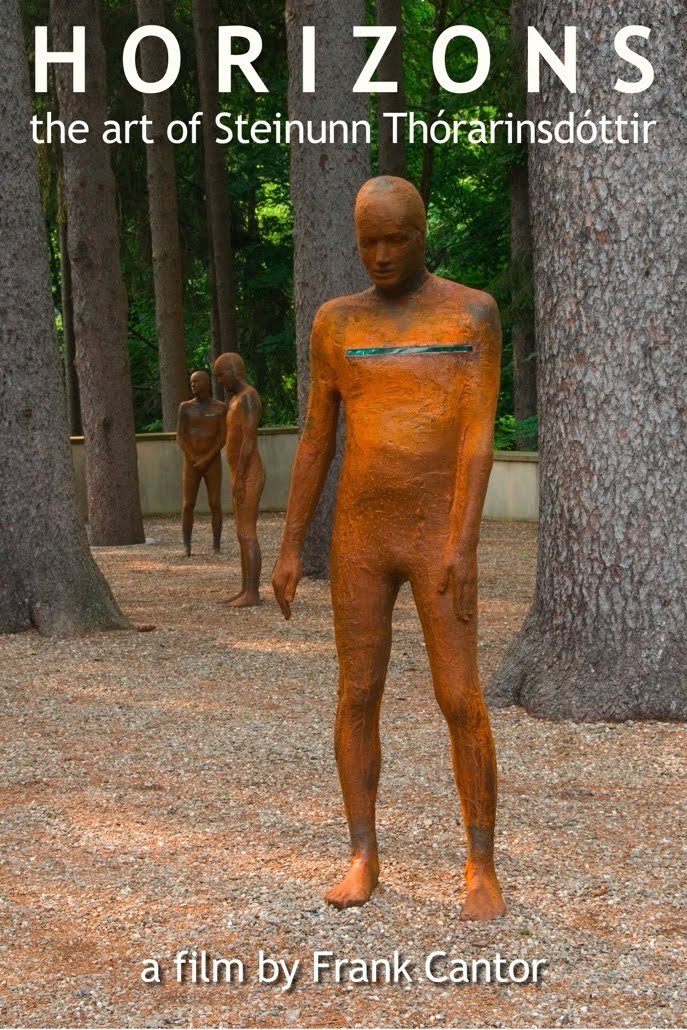
Steinunn Þórarinsdóttir (pronounced Stay-nun Thorens-daughter) is a sculptor from Reykjavik, Iceland, who has been exhibiting her art around the world for 38 years. Þórarinsdóttir studied sculpture from 1974 to 1980 in England and Italy. She previously exhibited her sculptures at the museum in 2011 during the inauguration of the sculpture garden in a yearlong exhibition titled “Horizons.” Þórarinsdóttir came to the museum in March of 2011 to discuss her installation.

Þórarinsdóttir says of her choice to become a sculptor, “I guess partly it was due to the fact that I come from a country that is in constant flux and formation. . . . When I started to work with sculpture it just felt like I had found my home. I was suddenly in control and connected. I could transfer my thoughts and feelings into something real and physical.”

The sculpture garden exhibits only works by woman artists, with “Tide” taking the second permanent position in the garden. The other sculpture occupying the garden is “Terra Verte #1” by Patricia Leighton, a Scottish artist.

Þórarinsdóttir is particularly thrilled about her sculpture being placed in the garden, emphasizing, “The fact that the Jane and Harry Willson Sculpture Garden focuses only on female sculptors makes it absolutely unique. Especially considering that sculpture was for a long time thought to be a section of the visual arts that was for men only!”

The sculpture was purchased with a gift from patron Judith Ellis in honor of docent Carol Dolson. Ellis has volunteered and supported the museum, served on the board for the Friends of the Georgia Museum of Art and created the Judith A. Ellis Endowment for Education. Carol Dolson is an award-winning children’s book author who graduated from UGA and lives in Athens, Georgia.

--
Stephanie Motter
Communications Intern


Thursday, August 24, 2017

Jason Hubbard Is Making a Living Work of Art

Jason Hubbard poses in his garden with the Horace Farlowe sculpture

For those who have walked along the south side of the Georgia Museum of Art over the past years, you might have noticed a dead and forgotten patch of land transform into a lush and calming garden niche. At the heart of that transformation is Jason Hubbard of UGA's Facilities Management Division, a true gardener if there ever was one. He has been digging in the dirt for more than 18 years, and it’s apparent he tends to his gardens with the utmost care, making sure to meet the specific needs of each plant. You can often find him in a broad-brimmed, straw hat, enveloped in his garden searching for weeds or taking a break to talk plants with home gardeners who pass by.

At one point, Jason only managed the giant circular pots by the main entrance, but 4 years ago he noticed an abandoned space just around the corner and took the initiative to rehabilitate it. The first step was to remove a dying dogwood and nurse another back to health. Then he began transferring perennials from other locations on campus where the foliage might have been too thick. Over the years, he has developed the garden with minimal budget, only receiving funds for nursery-born plants last fall. For Jason, little gardens like this one are his opportunity to contribute the greatest good. 

As a conscientious gardener, he keeps the space mostly organic except for a well-considered dose of pesticides on occasion. With the prevalence of concrete in mind, Jason has made a pollinator habitat so that vital pollinators like bees, wasps and hummingbirds have a sort of oasis. He considers what kinds of birds and insects certain plants cater to, and when discussing the give and take of pesticides with him, it becomes evident that the garden is a delicately balanced environment. That balance was enhanced this past summer with the installation of a marble sculpture by Horace Farlowe, a past UGA professor who made significant contributions to the growth of the sculpture department (you can find out more about that sculpture here). Jason’s garden proved to be an ideal location for the sculpture’s debut at the museum. He coordinated with the concrete pourers for the optimal location, and in the spring he will have the opportunity to uproot and reorganize plants to frame the new centerpiece.


Ben Thrash interviewing Jason Hubbard
Once just a patch of mulch, a beautiful garden now accompanies the museum’s southern entrance. It is with the utmost gratitude that we thank Jason Hubbard for his care and initiative in transforming the space. What used to be a common and forgettable corner has now become activated and lively, so if you happen to see a man in a straw hat when you walk by, be sure and stop to say thanks!

Benjamin Thrash
Intern, Department of Communications

Thursday, July 27, 2017

New Acquisitions: Sculpture by Horace Farlowe

Horace Farlowe, "Tennessee Cut."

In 2013, the Georgia Museum of Art acquired “Tennessee Cut,” a pink marble sculpture measuring 28 by 23 by 20 inches carved by artist and former University of Georgia professor Horace Farlowe (1933–2006). Previously tucked into a hidden garden at the UGA Hotel and Conference Center, where Scott Simpson of the Office of University Architects noticed it, the sculpture has found new life at the museum thanks to Robert Jarrell (b. 1963), an artist and former student of Farlowe’s; deputy director Annelies Mondi; preparators Todd Rivers and Elizabeth Howe; and Rebecca Salem, an undergraduate preparatory intern.

Simpson emailed Mondi to suggest that the Conference Center might be willing to transfer ownership of the sculpture to the museum, which it did. Mondi, who also took one course with Farlowe, and remembers him as a “patient and mild-mannered human being,” then consulted with Jarrell to restore and display the sculpture in a way that captured Farlowe’s intention for the piece and celebrated his legacy at the university. Located in a small garden to the right of the side entrance of the museum, the sculpture now faces the Lamar Dodd School of Art, connecting Farlowe’s professional and artistic careers and echoing his conviction that “Life and Art are the same thing.”

“Tennessee Cut” is part of Farlowe’s window series, so it was important that the piece be placed at a height to allow both adult and young visitors to look through to the other side, as well as that it frame a good view from either side. The sculpture now rests on a smooth, square concrete plinth poured carefully by Dave Lawson of the Facilities Management Division. Farlowe worked mostly in stone, and his sculptures, towering up to 17 feet tall, can be seen in Spain, Germany, Italy, Scotland and all over the United States. According to Jack Kehoe, one of his colleagues in the art department, the prominence of the marble-carving program at the university can be attributed to Farlowe’s skill and passion as an artist and teacher.


Horace Farlowe, untitled.

Farlowe’s work appeared in several exhibitions at the museum during his lifetime, including “City on a Hill: 20 Years of Art at Cortona” (1989). The museum also owns a small untitled example of his work, also in marble, that was a gift of Margaret Leary (GMOA 2016.250). Farlowe gave Leary the sculpture after they worked together on a site-memorial entry to commemorate the World Trade Center towers.

Martha Wilde
Intern, Department of Communications

Thursday, May 11, 2017

New Acquisitions: "Minnehaha" by Edmonia Lewis

Edmonia Lewis, Minnehaha, 1868
The museum recently purchased a significant 19th-century neoclassical work with funds from the Collectors of the Georgia Museum of Art. “Minnehaha” is a petite marble sculptural bust carved by artist Mary Edmonia Lewis (1844–1907). Born in Greenbush, New York, Lewis was an artist of mixed African American and Chippewa (Ojibwe) ancestry who was among the few female artists to have worked actively in Rome, Italy. Prior, she studied at Oberlin College in Oberlin, Ohio, and then moved to Boston. She gained a following there creating busts of prominent anti-slavery activists. Lewis also often portrayed American Indian subjects.

In Rome, Lewis produced several commissioned busts of prominent abolitionists and biblical and mythical figures. She was also known for her American Indian subjects drawn from the popular literature. Henry Wadsworth Longfellow’s epic poem “The Song of Hiawatha” (1855) inspired her to produce several figural groups, of which “Minnehaha” is an example. In Longfellow’s fictional poem, Minnehaha, a Dakota, was the lover of Hiawatha, a warrior among the once enemy nation of the Ojibwe.

Unveiling of "Minnehaha" as part of the annual Black History Month dinner.
This Minnehaha bust represented a rare opportunity to acquire a quality sculpture by this 19th-century pioneer. The purchase fills a major gap in the collection for both American and African diasporic artists who worked in the U.S. and abroad.

Shawnya L. Harris
Larry D. and Brenda A. Thompson Curator of
African American and African Diasporic Art

Thursday, October 06, 2016

"Driving Forces: Sculpture by Lin Emery"

“Driving Forces: Sculpture by Lin Emery” is on view now through April 2, 2017. Four of Emery’s large kinetic sculptures, including "Octet," "Splay," "Lyric" and "Umbrella Tree," will be outside in the Jane and Harry Willson Sculpture Garden, and five smaller sculptures will be inside in the Alonzo and Vallye Dudley Gallery. Included indoors is a maquette of "Tree Flowers 2" (also in the exhibition) to show visitors how Emery's works evolve from paper model to sculpture. Check out the video below to see the sculptures in motion.


An internationally recognized artist, Emery takes inspiration from the kinetic appeal of music, dance and natural forms, especially flowers and trees, to design works that move gently in response to the wind. Her main materials, polished and brushed aluminum, are the same as those used in boat building in New Orleans, where her work can be found throughout the city. Annelies Mondi, the museum’s deputy director of the museum and curator of the exhibition, came upon Emery’s work while in New Orleans. Mondi said, “It was incredible. She really is a big part of the city, and that intrigued me.” Emery was born in New York City in 1928 and studied under Russian sculptor Ossip Zadkine before settling in New Orleans.

Playwright Edward Albee, who knew Emery from when they were children, compared her sculpture to that of Alexander Calder and George Rickey, both of whom also make use of movement in their work. Albee writes, however, that Emery’s “work can be confused with no one else’s; the world of kinetic art is healthy in her mind and hands.” Emery's sculptures are the latest to be featured in the Jane and Harry Willson Sculpture Garden. Opened in 2011, the sculpture garden is devoted to the works of women sculptors. Previous exhibitions there have focused on sculpture by Alice Aycock, Patricia Leighton, Chakaia Booker and Steinunn Thorarinsdottir.

Wednesday, April 15, 2015

MFA Candidate: Louisa Powell


Trapped in Our Maps


Louisa Powell is a sculpture candidate interested in creating structural systems that explore spaces. Often starting with a single form, she lets the work transform itself and grow according to the space. Although most of her work is site-specific, for her show at the Georgia Museum of Art she had to find a way to be more flexible, creating it outside of the installation space. The idea for this work started with a bookshelf. 

“I have since decided to remove the actual bookshelf from the equation, but my form has boundaries and cut-outs in it that reflect its relationship with the bookshelf,” explains Powell. 

She says she hopes to do a second small piece that will interact with the architecture of the hallway outside the gallery. She wants it to be an iteration of the gallery sculpture and to react to the particularities of the site in which it is installed. 

Starting out as an environmental design student and earning her undergraduate degree in this field, Powell took her love for design and moved toward a deeper exploration of form. Preferring to work with her hands over the computer, her passion for installations took root and flourished. 

Powell currently has an installation on display at Creature Comforts. Previously she showed one of her installation pieces at the Bulldog Inn show, using the room to present an expansive breadth of shapes and organic forms. 

To see her newest installation, attend the Georgia Museum of Art’s “Master of Fine Arts Degree Candidates Exhibition” from April 11 to May 3, 2015.


Tuesday, February 17, 2015

Černý in Charlotte


Sitting in a small pool of water at Whitehall Technology Park in Charlotte, N.C., is a 22-foot-tall sculpture called “Metalmorphosis” and installed by Czech artist David Černý in 2007. Its seven segments each independently rotate 360 degrees and, when aligned, form the giant head of a metal man.

Černý has said that the sculpture is a “mental self-portrait.” Compared to some of his other work, “Metalmorphosis” is tame. One of Černý’s other sculptures, in Prague, is a fountain in the shape of two men urinating into a small pool. Another consists of two naked backsides that people can crawl on and through.

Lately, the sculpture’s visitors have reported that the segments no longer rotate and the mouth no longer spits water, but the stationary head is still a sight to behold. If you are in the Charlotte area, consider visiting the Whitehall Corporate Center to see “Metalmorphosis.” Until then, check out the video below to see "Metalmorphosis" in action.

Photo credit: American Asset Corporation


Monday, September 15, 2014

Iron Horse Celebrates 60th Anniversary


Athens and the University of Georgia share a history richly saturated in art and, usually, art appreciation. But, as a notable Athens moment proves, this has not always been the case. This year marks the 60th anniversary of the Iron Horse, one of the most infamous artistic disasters in both UGA and Athens history.

On May 25, 1954, Chicago artist Abbott Pattison's large iron sculpture, depicting an abstracted horse, was revealed on the quad outside of Reed Hall. The sculpture was one of five that the art department had commissioned Pattison to create for the university's campus (the first in this series, "Mother and Child," is still on display behind the Fine Arts building).

The very night the horse was installed, mischievous UGA students immediately began the work of defacing it. They shoved hay in its mouth, dropped manure around it, vandalized it with paint, and eventually lit a fire underneath it. Art, especially modern art, was a new focus at the university at this time, and many thought the delinquent behavior was a response to its introduction on campus. Others attributed it to negativity toward the artist himself. Pattison had written an article in the Red & Black (UGA's student newsaper), shortly before the installation of the Iron Horse, criticizing what he viewed as substandard academics and the student body's lack of appreciation for culture. In either case, the students had a perfect target for some personal expression.

Unsurprisingly, when Pattison found out about the destruction and disrespect he was both insulted and infuriated. He complained to publications such as the Atlanta Journal, saying, "I wanted Athens, Ga., to have a piece of sculpture to look at. And I think the least I could have expected, even if they didn't like it, was a little Southern courtesy." Word about the incident spread quickly, with publications such as Time Magazine reporting the story and interviewing Pattison.

Only a few days after the horse was unveiled, it was quietly taken into hiding. Four years later, in 1958, a university professor of horticulture named L.C. Curtis offered to take the horse to his farm, where it could be viewed by people driving by on the road. The horse would still be considered university property, but it would be out of the way from pranksters until the university decided it wanted it back on campus. Although the idea of returning the sculpture to UGA property has been discussed on occasion over the years, it has remained in Watkinsville with the Curtises.

In honor of this piece of local history, the Georgia Museum of Art and the Walter J. Brown Media Archives will co-host a free screening of the 1980 documentary "Iron Horse," directed by Atlanta filmmaker Bill VanDerKloot. The event, which starts at 4 p.m. and will be held in the Richard B. Russell Building Special Collections Libraries auditorium, as part of UGA's 2014 Spotlight on the Arts, includes interviews with alumni who were involved in the incident and will end with a discussion with VanDerKloot, Lamar Dodd School of Art faculty and Georgia Museum of Art staff.

Sources: OnlineAthens, Roadside America, Brown's Guides

Tuesday, November 06, 2012

A Separate Vision

Video by Kathryn Kao
            Vision can be many things. It can be a gift, a science, an image or a distant dream.
            But for Jonathan Jacquet, a professional artist, a security supervisor at the Georgia Museum of Art and a soon-to-be-nurse, vision is an obsession. His paintings and sculptures cling to a fading age of Romanticism that often borders on the grotesque. As an artist, he is heavily influenced by a childhood accident that left him blind in one eye, and on many levels, viewing his works is like reading an intimate autobiography. He is enthralled by how the brain and eye function together to read depth and proportion. In fact, most of his works of art examine the science of neurobiology to explain the physiological processes that occur while a person is drawing. For some people, this may be a dense and complicated subject matter, but for Jacquet, it is his life.
            He is a great admirer of scientists like Margaret Livingstone and Nobel Prize winner Ruth Hubbard for their investigations of how the eye functions. Jacquet humbly explains that Livingston’s article on Dutch painter and etcher Rembrandt might explain why he has a natural ability to replicate visual objects from life onto a two-dimensional plane. “There has been a lot of science and biology that’s fed into the understanding of vision and how the mind processes vision,” says Jacquet. “Just how you hold a pencil, that tactile feel, how the touch is and the amount of brain space dedicated to the hand is miniscule compared to the amount of brain space dedicated to the retina.”
             His stereo blindness, or inability to see depth, is a visual experience that is often represented as a ring or halo in his paintings. In a nut shell, his art depicts what an eye sees. If a person shuts one eye, he or she sees a round, oval shape that defines the perimeter of his or her vision. This ring, representing Jacquet’s unique field of vision, is often depicted in sketches with his nose at the bottom left corner and his eyebrow peeking over the top. Additionally, the anatomy of the retina is built in concentric rings that he believes students can use as a tool to perceive angles, horizons and values. Although this takes a bit of awareness on the artist’s part, the ring in the center of Jacquet’s vision makes reading proportions a great deal easier. “The amount of brain space dedicated to perceiving vision is phenomenal,” says Jacquet. “A student that could train themselves to become more aware of the retina as a tool would greatly aid them in drawing.” 
            To Jacquet, the retina is just as important as the hand, if not more. “Sight is a wonderful gift that is easily lost,” he says, gazing out the window at a clear sky. “Just being able to see currently, I greatly appreciate it.”
*          *          *
            Born on February 13, 1975, Jacquet was only 5-years-old when he stabbed his left eye. “I was carving a piece of wood with scissors my mom took away,” says Jacquet sheepishly. “But I kept sneaking the scissors and carving to make a little knife.” To cut the tape, Jacquet put the end of the roll in his mouth and started poking it with scissors, when he lost his grip and accidentally stabbed his eye. “I don’t remember it hurting. I do remember walking into the living room and being like, ‘Mom, am I going to be blind?’ and she said, ‘Yes, Jon, I think you probably will be.’”
            He was flown to Minneapolis, Minn., where doctors removed the lens over his left eye. But less than a year later, he suffered a retinal detachment that required doctors to wrap a sclera band around his eye. “I actually found out just recently that they should have removed it at around age 12, so my eye could have grown some,” he says. “But my eye is the same size as it was when I was 5-years-old because of the restriction by the sclera band. So there’s actually a rubber band around my eye, but it’s a piece of silicone.” Jacquet is frank about wanting a fake eye one day. “If I saved enough money, but it’s $3,000.”
           Jacquet’s earliest memory is of his first house in Marion County, Fla. He remembers the cows in his backyard, two geese, a fig tree and his dog named Blue. His parents, Leon and Melanie, met at a Bible college and moved the family, which included Jacquet’s brother Emmanuel and sister Star, across the country. The family traveled from Florida to North Dakota, South Dakota, Wyoming, back to Florida and then to Idaho, where they lived on a dairy farm for two years. When his family moved back to Florida from Wyoming, they lived on his grandfather’s front porch for six months.  Jacquet slept under a desk. “I think those were some of my favorite memories,” says Jacquet. “When I think about it, I’m like ‘Wow, we must have been really poor.’”
            While he was attending elementary school, his father moved the family to Cambridge, Idaho to find work. Two years later, Jacquet moved back to Florida, living in a tent for two to three months as the family traveled from Idaho. Along the way, Jacquet helped his father move water lines in fields and load up trucks with hay for money. “It was fun. We got to see birds and be outside all the time doing stuff,” he says. “We were just like migrant labor.”
*          *          *
            A romantic appreciation of sculpture and wood carving runs through Jacquet’s bloodline. His grandfather was a Swedish wood carver and cabinet maker, and his paternal relatives were glassblowers. Jacquet believes this hierarchical perception of art perpetuates within him, often hampering his professional goals. Nevertheless, the classically trained artist couldn’t care less about using an outmoded medium. “It’s what I like to do,” he says simply. “There are people that do what I want to do better, but I’m where I’m at.”
            He holds an intense affinity with major European artists and sculptors of the 16th and 17th centuries. Much of this appreciation stems from the depth of vision he experiences while standing in front of older paintings. Italian artist Caravaggio and Flemish Renaissance painter and printmaker Pieter Bruegel are some of Jacquet’s favorite artists. Their technique of layering transparent paint over opaque colors allows him to see a degree of depth despite his stereo blindness. His romantic fascination with wood sculptures—a medium he’s struggled to make time for in the past decade—is inspired by German sculptor and woodcarver Tilman Riemenschneider. “His work method was primarily facilitating a team of carvers to make a cohesive work of art and not carving solely as one individual,” says Jacquet. “It’s beautiful to me because it goes against the narrative of the isolated artist.”
            Jacquet is a history junkie, naming the English Reformation as one of the most fundamental turning points in art. It was during this time that his favorite painters started shifting away from the church toward the bourgeoisie as their primary supporters. Jacquet mimics the quiet drama of the early Baroque period by applying the painting techniques of Spanish painters Francisco de Zurbarán and Diego Velázquez. “I think Jonathan’s work is notably outside the trends in contemporary art,” says Katya Tepper, a contemporary painter and performance artist based in Athens, Ga. “They feel reactionary. I define them not by what they are, but by what they are not, how outside of the zeitgeist they feel. Although he and I appear to be working on opposite ends of the spectrum with our paintings, I think we are both mesmerized by paint as a material, and we are both expected to refer to its intense history when we make art in the age of technology.”
            Jacquet enjoys modeling sculptures after bog bodies, or preserved human corpses found in Northern Europe. When he lived in New York during the 1990s, he made several life-size figures from wood, hand-stitching leather over them with kite string to create a mummy effect. “Those who are looking for pictures to match their sofa don’t quite ‘get it,’” says Shawn Vinson, a professional art advisor and Jacquet’s representative in Atlanta. “Jonathan’s work stopped and made me look further. I was struck by his unique style and his painting talent was obvious.” These leather bodies were often suspended from the ceiling or hung from the wall for balance and dramatic effect. “I think I’m kind of attracted towards the grotesque because of my eye,” says Jacquet. “The facial deformity that’s caused by the eye being smaller than the other one is always there.”
            In 1997, Jacquet graduated from the Ringling School of Art and Design in Sarasota, Fla., with a bachelor’s degree in sculpture. He later earned his master’s in sculpture from the University of North Carolina at Chapel Hill in 2001.  Jacquet was a scenic sculptor for the Ringling Bros. Circus for two years, carving massive floats from polyurethane foam. He sculpted a 40-foot-tall mountain for “Hercules on Ice” and cast 40 to 50 skulls for Rasputin’s lair in “Anastasia on Ice.” As the lead scenic sculptor for Sightline Studios in Stark, Fla., Jacquet helped construct a 30-foot-long dragon that now sits in a theme park called Terra Mítica in Spain. Additionally, he carved rocks for Universal Studios, sanded the seat backs of river rafting ride Popeye & Bluto’s Bilge-Rat Barges at Universal’s Islands of Adventure and carved a Mickey Mouse statue for a rest stop off Interstate 4 in Florida.
*          *          *
            Jacquet currently works at the Georgia Museum of Art as a security supervisor and at Athens Regional Medical Center as a patient sitter. He is finishing his last year of nursing school at Athens Technical College and will graduate next spring. Balancing his time making art with work and family is a stressful challenge for the father of two. For the past decade, he has not created many sculptures—his preferred medium—because of time constraints.
            He adores his two children, Daisy, 8, and Victor, 6, but admits that taking care of them limits time for his art. On weekdays, he wakes up at 7:15 a.m. to feed his kids and drop them off at school, so he can get to class by 8:30 a.m. After his two four-hour-long lectures are over, he picks his children up from school and tries to devote the rest of his time to them. Every Tuesday, he takes them to the library so they can check-out books and do homework. “Victor’s starting to read, and Daisy’s reading chapter books,” says Jacquet. “She’s in this kind of network for kids and what books they read.” He can name several of her favorite series off the top of his head: “A Series of Unfortunate Events,” “Judy Moody” and “Diary of a Wimpy Kid.”
             When he arrives home, he cooks dinner (his entire family is vegetarian), gives his children baths and then reads to them for an hour before they fall asleep. He has about 90 minutes to himself after this to read and prepare for the next day. 
*          *          *
            After spending most of his childhood in and out of hospitals, Jacquet knew he wanted to be either a doctor or an artist. The course curriculum at Athens Tech coincides with Jacquet’s interest in medicine and, he hopes, will provide him with a stable income in the future.  Despite his interest in both areas, Jacquet still feels torn between his art and nursing school. “I hope my pursuit of art doesn’t damage my career as a nurse,” he says. “I don’t know how corruptive the two will be.”
            He believes that sacrifices in his artwork are necessary to pursue a career in nursing. “People’s lives are important,” he says. “If they need me to be at a level of skill that might be impeded by my career in art, then I might have to sacrifice something.” Despite his confusion, he finds nursing fulfilling. He both fears and respects the amount of dedication the profession requires. In clinicals, students are expected to mimic a nurse’s typical work day, often forcing Jacquet to put art on the back burner. After spending eight hours a week in class and 36 hours a week prepping and doing paper work, he doesn’t have much time to paint.
            Instead, he turns to his children for inspiration. Lately, Victor has been drawing more. He likes to decorate pages, stapling them together to make a book or magazine. “They believe they’ll be able to draw like I can,” he says. “To help them, I put pirate patches on them, so they can draw with one eye.” He wants his children to follow their interests and isn’t too concerned about them learning how to draw accurately from life. “I have a vision of what I’m trying to work towards,” he says. “Sometimes it gets clouded, but I have faith that I know what I want to do. I always know I’ll be making art.”

Wednesday, May 30, 2012

Intrinsically Radical: Chakaia Booker


    Not many artists easily use rubber in their work (except for rubber cement, in most cases). Chakaia Booker, however, has gained fame for her incredible pieces sculpted out of her go-to medium: car tires.
    On the rim of a wheel, tires don’t appeal much to the eye, if at all—as long as all four are inflated, I’m good to go. Otherwise, they’re probably the last thing on my mind, least of all for an art project. For Booker, the opposite rings true. Her imposing yet magnificent pieces exhibit a fluidity that seems almost alien, pushing at the boundaries of the real in an artistically meaningful manner—who would have thought of morphing something as crudely made as a tire into a structure that mimics the natural contours of a human spine? By using a material so out of left field in such a manner, Booker makes a name for herself not only as an artist, but as an innovator.

                                                        Phobic Digression-Chakaia Booker

    Booker’s work is in collections ranging from the Atlanta Botanical Gardens to the Metropolitan Museum of Art to NASA. GMOA is lucky enough to have a special exhibition of her pieces in the Jane and Harry Willson Sculpture Garden, where they will remain until next April.

Tuesday, January 17, 2012

ATHICA: Athens Institute for Contemporary Art, Inc. presents “Southern”


Sam Seawright, The Poet's House (Moth), 2001
ATHICA is showing its 44th exhibition, “Southern,” beginning this Saturday, Jan. 21, and running through Sunday, March 4. The exhibition features many new works exploring the emotional depth and aesthetic diversity of nine artists across four generations.

Through photography, video and sculpture, the artists present a visually rich installation that tests the boundaries between art and religion, aesthetic and documentary practice and folk and fine art.

Exhibition highlights include documentary photographs of the interior and exterior grounds of the St. Paul Spiritual Holy Temple in Memphis, Tenn.; a multimedia work addressing the relationship between the Hope Scholarship and the Georgia Lottery; and a controversial painting referencing the Ku Klux Klan that was once removed from a faculty exhibition at Gainesville College by its president.

Participating artists are Stanley Bermudez; Drék Davis; Hope Hilton; Ted Kuhn; Michael Lachowski; Judy Rushin; Sam Seawright; John Seawright; Steven Thompson; and James Perry Walker and the family of Washington Harris of the Saint Paul Spiritual Holy Temple.

The exhibition’s opening reception will be held on Saturday, Jan. 21, from 7 to 9 p.m. The curator and assistant curator of “Southern” are Judith McWillie and Lauren Williamson.

Friday, September 30, 2011

S L O W Invitational Exhibit


Gallery 307 in Lamar Dodd School of Art is currently full of works that make up the exhibition:
S L O W. On view from Sept. 23 through Oct. 17, 2011, the S L O W 2011 Invitational exhibit features Stefan Chinov (photography), Brian Dettmer (book arts/sculpture), Dawn Gavin (mixed media installation), Claire Hairstans (printmaking), Zack Mory (drawing) and Annie Strader (sculpture, video, installation).

According to the Lamar Dodd website, the six featured artists are "exploring the idea of time through various media and conceptual approaches." Each work captures the intricacies of a moment in varying mediums such as graphite drawings, pinhole photographs, prints, sculptural books, video installations and installations in other media.

The gallery is open Mon. through Fri. from 9 a.m. to 5 p.m. and is curated by assistant professor of art at Lamar Dodd Jon Swindler, Dr. Nell Andrew and Gallery Director Jeffrey Whittle.

Thursday, March 03, 2011

Tonight: Film and Filmmaker Talk with Frank Cantor


Join us at GMOA this evening from 5:30 to 8 p.m. to see Frank Cantor’s film “Horizons: The Art of Steinunn Þórarinsdóttir” and an excerpt from the documentaries in the “Art of Collaboration” series featuring Roy Lichtenstein, Jim Rosenquist and Frank Stella. Cantor will speak about the films and his work with artists.

Click here for more information about "Horizons." We hope to see you tonight!

Wednesday, November 10, 2010

Live Install!


You can't see much right now, as the sun is peeking over the building and it's very bright this morning, but if you check out our live webcam today, you should be able to see a bit of the installation of Icelandic artist Steinnun Thorarinsdottir's sculpture "Horizons" (a shot from which appears above) in the Jane and Harry Willson Sculpture Garden. Read more about the artist here.

Monday, October 11, 2010

Lamar Dodd School of Art Lecture: Donald Lipski


The Lamar Dodd School of Art will host sculptor Donald Lipski as part of the Visiting Artist and Scholar Lecture Series on Tuesday, October 12, at 5:30 p.m. in room S151 of the Dodd’s building on East Campus.

Lipski has exhibited around the world, including at the Metropolitan Museum of Art, the Whitney and the Art Institute of Chicago. He has also received the Guggenheim Fellowship, the National Endowment for the Arts Award, the American Academy of Arts and Letters Academy Award and the Rome Prize.

Lipski’s work often combines unlikely objects and materials to create something new, such as the trumpet and candle seen above. He says, “I strive to both seduce and challenge the viewer, to provoke wonder and delight…to lead him to question, to make his own metaphors.”

He has also gained popularity and acclaim for his public projects. His work is currently on view in a number of locations including the Miami International Airport, Levine Children’s Hospital in Charlotte, N.C., and the Sacramento Airport.

For more information, visit the Lamar Dodd website or Donald Lipski’s website.

Thursday, June 17, 2010

Monumental sculpture moving to Naples, Florida


Dawn Forest in the lobby of the Georgia-Pacific Center

Atlanta is losing an important piece of art to the Naples Museum of Art in Florida. The large, multipart installation Dawn Forest by Louise Nevelson has been in the lobby of the Georgia-Pacific Center since 1986. With the company planning on renovating the space, they considered the space with and without the piece, opting for more retail space over the monumental artwork. Promoting Dawn Forest under the stipulation that it must be displayed in one piece, the company fielded inquiries from several Atlanta locations, including the High and the Carlos Museum. However, both declined the opportunity because of space issues. This was not an easy decision for the directors, according to Carlos museum director Bonnie Speed. "That’s well and good for Naples; it’s a loss for Atlanta. It’s distressing to hear it’s leaving Atlanta. It’s unfortunate that we were unable to keep this iconic piece of public art."

Nevelson was an influential female artist in the world of contemporary sculpture and installation art. She often pieced together found wood into compositions connected by the color, either whites or blacks. Dawn Forest is the largest of Nevelson’s art. “Composed of standing columns, some as tall as 25 feet, and vertical hanging pieces, which punctuate the long lobby, as well as an 11-by-26-foot wall relief on the mezzanine,” it has quite a presence in its current location.

When director and founder Myra Daniels of the museum in Naples heard about the availability of Nevelson’s piece, she came to Atlanta right away to see it. “I committed to it on the spot,” Daniels said. “Our collection’s strength is in American modernism, and Nevelson was at the top of our wish list. This is a once-in-a-lifetime opportunity.” The museum is making space in the reception area to accommodate the sculpture, including moving a Dale Chihuly chandelier. Needless to say, the Naples Museum of Art is very excited about the donation from Georgia-Pacific and MetLife.

(http://bit.ly/bqm4t2)

Wednesday, April 14, 2010

MLC Sculpture Garden

If you've been near the Miller Learning Center on UGA's campus today, you might have noticed that a few sculptures have popped up in the memorial garden. If you have the chance, take advantage of the beautiful weather outside to look at some pretty cool sculptures. If you can't make it, check out the Flickr page for photos.

Thursday, February 18, 2010

Thursday, October 15, 2009

Art Around Athens (and farther...)


If you happen to be in the Marietta, Ga., area tomorrow (Friday, Oct. 16), our friend Jack Kehoe (designer of the Smitty award for the GMOA Volunteer of the Year) is having an opening reception for the exhibition The Mystery of Marble at dK Gallery on the Square from 6 to 8 p.m. The email says, "Over 30 sculptures and paintings from the world renowned sculptor,
artist and Professor Emeritus at the University of Georgia will be available for the first time in a gallery venue." Plus jazz!

There's also a fabulous pottery sale being put on by the UGA Ceramics department in the hallway outside our offices (and their classrooms) in the Visual Arts Building. Pretty much everyone in our office has bought something, and there's a tremendous range of stuff out there.


Edit: Whoops! We almost forgot about Mike Kemling's lecture as part of the VCC at the Lamar Dodd School of Art this evening (at 5 p.m. in the big auditorium). Kemling will deliver the lecture "Il scultore fiorentino: Giuliano Bugiardini's portrait of Michelangelo," which proposes that, "Much more than an attempt to record Michelangelo’s physical appearance, the portrait serves as key instrument in the fashioning of the sculptor’s identity by including the white turban, an attribute commonly found in the portraits of the 15th-century Florentine artist Donatello. The portrait was completed during the period when Michelangelo accepted the commission for the Medici tombs in the New Sacristy of San Lorenzo; a project that would have solidified Michelangelo as the leader of Florentine sculptors. In the absence of these works, Bugiardini’s portrait sought to crown Michelangelo with the turban of Donatello, emphasizing the notion that Michelangelo was the heir apparent to the traditions of sculpture in Florence."

Wednesday, October 14, 2009

How It Is at Tate Modern


Tate Modern has just installed its 10th Unilever commission, this one by Miroslaw Balka and titled "How It Is." The 30-meter-long shipping container-esque box is painted on the inside with blacker than black paint, creating an experience of total darkness and, according to some news story, cacophony due to younger visitors squealing and running around. The Guardian has a nice story and video on the work, the latter of which supplied the above image (to give some idea of scale) and presents the experience as eerie, frightening and beautiful. How often are we made conscious of being dwarfed by structures? And how often do we encounter such complete darkness? It seems to have elements equally from corn mazes (on our mind at this time of year) and gazing into the abyss, which is certainly an interesting combination.